|
|
AfroCubaWeb
|
|
Dr. C. Esteban Morales Domínguez
1942-2022
|
| Some of Esteban Morales' writings prior to 2011. See Articles/Articulos for later articles | Algunos de los escritos de Esteban Morales antes de 2011. Ver Articles/Articulos para artículos posteriores |
Corruption: The true counter-revolution? 4/21/2010 Progreso: "Without a doubt, it is becoming evident that there are people in positions of government and state who are girding themselves financially for when the Revolution falls, and others may have everything almost ready to transfer state-owned assets to private hands, as happened in the old USSR. Fidel said that we ourselves could put an end to the Revolution and I tend to think that, among other concerns, the Commander in Chief was referring to the questions relative to corruption. Because this phenomenon, already present, has continued to appear in force. If not, see what has happened with the distribution of lands in usufruct in some municipalities around the country: fraud, illegalities, favoritism, bureaucratic slowness, etc. In reality, corruption is a lot more dangerous than the so-called domestic dissidence. The latter is still isolated; it lacks an alternative program, has no real leaders, no masses. But corruption turns out to be the true counter-revolution, which can do the most damage because it is within the government and the state apparatus, which really manage the country's resources."
Corrupción: ¿la verdadera contrarrevolución? 4/15/2010 Desde la Habana. Originally published on the UNEAC site, but then taken down.
Desafíos
de la problemática racial en Cuba 2/13/2008 Jiribilla: "La
aparición del libro Desafíos de la problemática racial en Cuba (Fundación
Fernando Ortiz, 2007), del economista y politólogo, Esteban Morales Domínguez,
constituye de por sí un hecho trascendente dentro del campo de las
Ciencias Sociales cubanas de hoy. El retraso de un estudio que, además de
la perspectiva histórica, incluyera un análisis de la cuestión de la
raza en la Cuba revolucionaria, ha postergado un debate que se ha
realizado mayormente fuera de la Isla o hacia el interior de nuestra
sociedad civil. Esta aproximación científica contribuye a legitimar la
importancia de asumir el tema racial dentro de las agendas investigativas
institucionales y dentro del diseño y puesta en práctica de las políticas
sociales y culturales en el país."
New
book focuses on racial issues in Cuba - Its author, Esteban Morales,
scrutinizes the topic of race relations in the island from colonial times
to present day. 2/4/2008 Cuba Now: "Economist,
political scientist and essayist Esteban Morales Domínguez has repeatedly
stated, in several articles and interviews, that lack of cultural
knowledge and ignorance, among other factors, have played an important
role in helping silencing and omitting racial issues in Cuba, rendering
the topic unworthy of public debate. The publication of his book,
Challenges posed by racial issues in Cuba, recently launched at Fernando
Ortiz Foundation in downtown Havana, has opened one more space to fight
back apathy and indifference, thus promoting awareness among those who
still consider that the Negro issue does not call for assessments or
scrutiny."
Letter quoted in: James Early: Carlos Moore's Outcast Vision and Dangerous Deceit 12/28/2008 CubaNews: "As I've previously mencioned, Moore and others are part of a recent trend to claim that Obama's election is some kind of threat to Cuba because Obama is Black and because, supposedly, this means that Cuban government can no longer say that the United States is racist. As I've mentioned more than once before, Cuba DOES continue to have racial problems, but they are both nothing compared to the racial problem which are widespread in the United States. Their origins and nature are quite different and it's extraordinarly disingenuous to try to conflate them as the group of people such as Carlos Moore, the Miami Herald, and others, all of whom have a long history of hostility toward the revolutionary government in Cuba, have been trying to do." James Early is on the Board of Directors of TransAfrica Forum.
El
tema racial y la subversión anticubana 9/8/2007 Jiribilla: "Los
negros de Cuba luchan todos los días en los espacios abiertos, que ya son
muchos, sin dejarse engañar por aquellos, que lo primero que tendrían
que hacer sería superar la republiqueta racista, modelada a imagen y
semejanza de los años cincuenta en Cuba, que le han construido a los
negros cubanos de Miami, la extrema derecha cubano-americana. Dejando prácticamente
a la inmensa mayoría de los negros que allá viven, en el mismo lugar que
ocuparon en la Cuba neorrepublicana, solo que casi 50 años después. Y ni
siquiera hablar de que puedan los negros prosperar en cuanto al acceso al
poder. El poder allá, es sólo para los blancos ricos, como lo fue en
Cuba antes del triunfo de la revolución."
| La
problemática racial cubana actual: consideraciones para un modelo de análisis por Esteban Morales Domínguez |
|||||
|
Anti-Cuban subversion: the race issue,
9/07
Malcolm X: An Unyielding
Revolutionary, 7/07
Cuba: Color de la Piel, Nación, Identidad y cultura: ¿ un desafío contemporáneo? 6/07 [27 pages, PDF, 245kb]
Cuba: Algunos Desafios del Color, 1/07 [49 pages, PDF, 315kb ]
POR QUÉ ES NECESARIO UN PLAN DE ACCION PARA MEJORAR LA SITUACION DE LOS NEGROS Y MESTIZOS EN CUBA. 11/6/2001
 FACTORES PARA UNA SOLUCION DE LA PROBLEMÁTICA RACIAL
EN CUBA.
FACTORES PARA UNA SOLUCION DE LA PROBLEMÁTICA RACIAL
EN CUBA.
[Su ultima publicacion sobre la problemática
racial en Cuba en
Facebook, republicada en 2021 y originalmente en 2013. En 3/2021, agregó: "Desde
el 2013 hasta hoy no pocas estan en proceso de superacion: contamos ya con un
Programa Gubernamental que se preocupa por la solucion del problema." Pero la
publicacion del 2022 no tiene esto.]
Existe un conjunto de factores, que aparecen como determinantes en la búsqueda
de soluciones para la problemática racial en Cuba. Tales factores no pueden ser
tratados por separado, sino en una estrategia de trabajo que tome en
consideración, aspectos económicos, políticos, culturales, sociales,
educacionales, sicológicos, de género, que deben ser manejados horizontal y
verticalmente. Es decir, desde el plano individual al social, pasando por la
comunidad; y horizontalmente, buscando la coordinación de todos los elementos
que se desenvuelven a un mismo nivel.
Entre estos factores se encuentran de modo general los siguientes:
1- La ignorancia acumulada sobre el tema dentro de la sociedad cubana.
2- La no aceptación de su existencia, por muchas personas, con independencia de
su filiación racial.
3- La insuficiencia de debate, sobre todo, publico.
4- El interés de muchas personas por ocultar o soslayar el tema.
5- La ausencia del tema en la educación a todos los niveles.
6- La práctica ausencia del tema en los Medios Masivos de modo especial en la
prensa plana y en la televisión
7- La aun limitada presencia del tema en la actividad científica y académica.
8- La ausencia del tema en las estadísticas nacionales. Con especial incidencia
en aquellas variables socioeconómicas que resultan indispensables para medir el
nivel de vida de los grupos raciales que forman hoy la sociedad cubana.
9- La sistemática insuficiente presencia del tema en el discurso político. Lo
cual afecta su consideración en el trabajo político-ideológico y
consiguientemente el espacio que debiera ocupar en la agenda de las
organizaciones políticas y de masas.
10- La presencia de errores conceptuales cuando el tema ha sido abordado a nivel
nacional e internacional.
11- La presencia del tema racial como instrumento de subversión política
interna.
12- La necesidad de fortalecer el trabajo cultural alrededor del tema.
Todo lo anteriormente esbozado, nos permite entender y explicar, el insuficiente
nivel de prioridad que tiene aún el tema racial dentro de la política nacional.
Al mismo tiempo de que, a pesar de su importancia, no cuenta con la atención que
merece por parte de las organizaciones políticas, de masas y los organismos de
la administración central del estado. Lo cual nos lleva a preguntarnos, si
estamos o no ante un tema de importancia para la sociedad cubana.
La sociedad civil cubana no aborda el tema racial suficientemente. Entre los que
le prestan cierta atención se destacan: Ministerio de Cultura, Ministerio de
Educación y Ministerio de Educación Superior, recientemente incorporados.
Algunas Instituciones Culturales y Científicas entre las que se destacan: UNEAC,
Centro Marinello, Fundación Ortiz, Fundación Nicolás Guillen, Casa de África,
FLACSO Universidad de La Habana, Archivo Nacional, Biblioteca Nacional, Revista
Temas. Proyectos Comunitarios varios como: Balcón de Arimao, Balcón de los
Milagros, Cofradía de La Negritud, Proyecto Vedado y otros.
Siendo insuficiente la divulgación de sus actividades.
Por lo que el entorno en que se mueve el tema no nos permite afirmar que ya
exista un nivel adecuado de debate sobre el mismo. Casi nunca nuestros medios
divulgan las actividades sobre el tema.
Estoy convencido de que nadie se atrevería a decir que no se trata de un tema
importante. Pues negarlo, sería casi equivalente a proclamarnos como racistas,
cosa que nadie acepta. Pero la practica social, hasta hoy, dice otra cosa. El
partido, en sus núcleos, no trata el tema, la UJC tampoco, ni la CTC, la FMC, ni
los CDR; salvo para la Comisión de Educación de la Asamblea Nacional, nunca el
tema aparece en las agendas de debate de ninguna organización.
El tema en lo fundamental, más bien, es tratado a partir de un conjunto de
personas y entidades interesadas, en espacios cerrados y nunca se divulgados, lo
que se debate en tales espacios.
¿Continuamos estando en presencia de un tema tabú? Yo creo que aun sí. Y es muy
lamentable que así sea; porque conflicto de nuestra realidad social, que no
abordemos, termina virándose contra nosotros mismos.
Pues los temas, sobre todo internos, no se regalan, ni se venden; ni siquiera se
prestan. Tienen que ocupar un permanente espacio de debate dentro de la sociedad
civil, que es la llamada, en última instancia, a su abordaje para solucionarlo.
Entonces pensamos, que para sacar el tema racial del espacio en que esta, solo
es posible, si respecto a su tratamiento se adoptan las medidas siguientes.
1-Es necesario que el tema racial entre a todos los niveles en la escuela
cubana. De lo contario, nunca llegara a formar parte integral de la cultura. Y
nosotros necesitamos hacernos de una cultura antidiscriminatoria y antirracista.
Como resultado de la ausencia del tema racial en la educación cubana, en nuestra
escuela se generan hoy fenómenos muy negativos. Las diferencias entre las
personas, por lo general, son explicadas a partir de los estereotipos y
prejuicios, lo cual engendra el racismo y la discriminación racial. Lo que no
pocas veces, es exacerbado en el ambiente familiar.
La escuela nuestra aun no trabaja suficientemente, en función de coaligar a sus
educandos, dentro de una concepción integral del ser cubano.
Aun así, de todos modos, los jóvenes se mesclan, pero, generalmente, cuando
llegan a la familia, casi todo se deshace. Porque la poca formación adquirida en
la escuela es débil, no suficientemente científica y los prejuicios familiares y
de la calle, pueden actuar con relativa facilidad. Porque la escuela, en
realidad, no prepara lo suficiente al joven, para actuar contra los prejuicios
subyacentes en la calle y la familia. Siendo esta una gran batalla a ganar.
Porque esa lo es también contra los prejuicios, sobre todo, trasladados
generacionalmente.
Como resultado de todo ello, no podemos estar seguros, de si al final, obtenemos
al ciudadano que necesitamos. Los jóvenes que comparten el aula, apenas se
conocen a fondo, porque no comparten sus procedencias raciales, ni algunas
inquietudes, rasgos culturales y hábitos que los diferencian. Aspectos que
tienden a manifestarse por medio de estereotipos y prejuicios raciales, que
generan la discriminación, que no pocas veces el ambiente social y la familia se
encargan de profundizar.
2- Muchas personas, con independencia de su filiación racial, no aceptan la
existencia del tema. No pocos, ante su sola mención, ¨huyen despavoridos, y
otros se encogen de hombros, como si el asunto no tuviera nada que ver con
ellos. Siendo estas variantes, parte de una actitud social negativa. Porque la
persona que no experimenta la necesidad de asumirse como lo que es; entonces, es
proclive a asumir, sea blanco, negro o mestizo, actitudes en las que los
estereotipos y los prejuicios raciales toman espacio.
Si perdemos la oportunidad de que los muchachos, se compenetren en la escuela,
en la calle ello se convierte en un problema casi sin solución. Porque en la
calle, actúan una serie de factores que están totalmente fuera del control de la
escuela y de la familia. Luego la importancia de la escuela consiste, en que es
dentro de ella, donde debemos lograr formar en los educandos, una serie de
actitudes, hábitos, una ética, que son las que los preparan para enfrentar la
sociedad; una sociedad cubana, que aun tiene muchos defectos, deformaciones e
incomprensiones. Una sociedad que está aún muy lejos de la perfección.
3-La ausencia del debate público del tema, genera el acomodamiento, la
ignorancia, el desinterés y la despreocupación. Pues ante cualquier problema
social, el individuo debiera sentir la necesidad de adoptar una actitud
determinada. De lo contrario, deviene un ser inexistente, y lo que es peor aún,
una persona manipulable. No puede haber problema social en que el estudiante no
reciba, desde la escuela, la formación que debe tener para afrontarlo. Por eso,
decía Jose Martí, con toda razón, que “educar es preparar al hombre para la
vida”.
4-Algunas personas sienten un interés particular por ocultar el tema. Actitud
detrás de la cual siempre hay prejuicios inconfesados. Perjuicios que casi
siempre se encuentran ligados al temor de asumirse racialmente. Entre nosotros
sabemos que hay muchos que tratan de pasar por lo que no son. Es la influencia
que nos dejó, asumir superficialmente a José Martí y dándole ventajas a J.
Antonio Saco. Concepción esta última, en la que el negro no tenía cabida en la
sociedad cubana y donde el cubano quedaba definido solo como blanco.
De ahí vienen los prejuicios, el racismo, los criterios de adelantar la raza,
etc. que subyacen aun en nuestra sociedad.
5- Hay mucha ignorancia acumulada sobre el tema. Esto se explica, a partir de su
falta de tratamiento en la escuela, una ausencia de apreciación científica
sistemática, el interés en ocultar el tema, la huida de sus consecuencias
negativas, su cada vez menor consideración estadística, la vergüenza que produce
en algunos considerarse portadores de prejuicios raciales, la voluntad de
olvidarlo, la tendencia a tratarlo como algo no digno de ser recordado, la
tendencia a no asumirse, etc. Hay ignorancia voluntaria e involuntaria. Ambas
difieren en los métodos para ser tratadas. Por supuesto, la más difícil es la
voluntaria, pues se trata siempre de una actitud cínica y desvergonzada, falto
de ética ante el problema.
6- Los medios no asumen el tema con sistematicidad; son pocos consecuentes al
tratarlo y muy interesados en soslayarlo. La prensa plana diaria casi nunca lo
trata. La televisión solo recientemente ha comenzado a tratar de incluir matices
en sus programas. Solo la radio lo asume con cierta asiduidad. El cine es el que
más lo ha tratado, aunque de manera suficiente. Todo lo cual genera una ausencia
del encuentro sistemático que debiera tener el ciudadano con el tema. Pues los
medios no contribuyen a su divulgación ni debate. Peor aún, cuando en un
programa televisivo no hay representatividad racial, es casi imposible pedir las
actitudes sociales adecuadas a los que no se ven representados. Porque la
imagen, en particular televisiva, está muy ligada al problema de los paradigmas.
Las personas necesitan verse representadas, pues lo contrario es una de las
tantas formas de ignorarlas y de que se sientan invisibilizadas.
7-La actividad científica ha asumido el tema, pero casi sin ninguna
sistematicidad. Y diría hasta con cierto temor. Solo algunos Centros de
investigación lo estudian, introduciéndolo en sus proyectos. Su tratamiento en
las aulas universitarias es limitado y nada sistemático. Excepto en la Facultad
de Letras y Artes y de Filosofía e Historia, casi no existen asignaturas que lo
aborden. Nuestros claustros de Ciencias Sociales en general, pocas veces lo
recomiendan para trabajos de curso, diplomas y tesis doctorales.
Nuestros estudiantes, a todos los niveles de la educación, no se sientan en las
aulas, a recibir un currículo, en que experimenten la sensación de que se les
asume como miembros de una sociedad unietnica y multirracial.
No hay discriminación en nuestras escuelas, respecto al derecho a estudiar, pero
si la hay, cuando nuestros patriotas negros apenas aparecen en los libros de
historia, y se desarrollan materias, donde casi nunca el negro o el mestizo,
aparecen desempeñando funciones protagónicas.
8- Nuestro Sistema Estadístico apenas aborda el tema racial. Nuestras
estadísticas nacionales son “incoloras”. Aun con aquellos datos estadísticos en
los que se observa el avance social de Cuba y que son enviados a Naciones
Unidas.
Las categorías socioeconómicas no asumen el color, por lo que nuestros
indicadores económicos del nivel de vida de la población, carecen de la
capacidad para medir el estado y nivel socioeconómico de nuestros grupos
raciales. Lo que les resta objetividad para el análisis social y político. Se
muestra el desempleo, el estado de la vivienda, el nivel de ingreso, pero nunca
se llega a saber como los grupos raciales están representados dentro de esos
indicadores.
Nuestras estadísticas nacionales echan por la borda siglos de historia; porque
todos los cubanos no son iguales, todos no llegaron ni decursaron de igual forma
por el proceso de formación de la nación cubana.
La revolución nos igualo mucho a todos los que nos quedamos en este país, porque
los que eran más diferentes, casi todos se fueron. Pero ese problema de la
igualdad social no está resuelto y más que ello, creemos que se va a complicar.
Es más, ya se está complicando. Porque los que se fueron están regresando Y esa
paradoja, puede incrementar la desigualdad, aunque nos convenga. No nos conviene
volver al igualitarismo de hace unos años, como tampoco nos conviene ser muy
desiguales; se trata de lograr de un punto intermedio, que nadie nos puede decir
aun como lo vamos a alcanzar. Aunque es el dinamismo social que se introduce lo
más importante. Porque el resultado de tal proceso, al final, solo puede ser
beneficioso para Cuba.
9- Existe una sistemática ausencia del tema racial en el discurso político, que
le resta fuerza para abordarlo, y que este sea objeto de debate en las agendas
de las organizaciones políticas y de masas. Este discurso refleja los intereses
de la población de un modo muy general, poco concreto, sin tomar en
consideración las diferencias que provienen de los distintos grupos raciales
existentes. El discurso político debe adquirir la conciencia de expresar el
color, el género, la identidad cultural, para ser más completo, o de lo contario
se quedará en un espacio, dentro del cual, en tendencia, estará alejado de la
realidad social concreta, por lo que nadie lo podría asumir como propio.
10-Se ha producido la situación de rendir informes nacionales sobre el tema con
errores conceptuales, como ocurrió recientemente con el caso del Informe de Cuba
a la Comisión de Derechos Humanos de Ginebra. Se decía de manera absoluta que la
discriminación no es institucional y de que esta ultima solo es el resultado de
lastres históricos. Y yo pregunto ¿Quién es responsable de que nuestras
estadísticas sean incoloras, de que el color no esté en la escuela y de que
apenas este en la televisión, no son acaso instituciones de nuestro estado y
gobierno?
Ya, existe una voluntad política expresa, aunque todavía no generalizada, de
atacar la discriminación y el racismo, pero estos existen. Y no son el fruto de
lastres históricos, como también se dice en el Informe, sino el resultado de
imperfecciones que aun la sociedad cubana no ha logrado superar y es capaz de
reproducir.
Ya existe una Resolución Gubernamental, dirigida a trabajar para solucionar los
desafíos de tema. Pero aún es necesaria avanzar mucho en ello. Ya se trabaja
fuertemente en los programas de la Escuela, en la bibliografía y la preparación
de los profesores que deben abordar el tema. Pero aún falta mucho para que los
medios, complementen ese trabajo, en la televisión, la prensa escrita, etc.
El tema racial ha pasado a ser un instrumento de subversión política interna,
sin que se haya hecho lo suficiente, hasta ahora, por contrarrestar tal
situación.
La actividad contrarrevolucionaria, siempre ha sido objeto de atención por parte
de las organizaciones políticas y de masas. Pero parece como si se considerara,
erróneamente, que el tema racial no podría ser también objeto de manipulación
política, o devenir en instrumento de la subversión política interna. No todos
los que manejamos este tema vemos de igual modo su solución: algunos llegan a
decir que solo un cambio del régimen político en Cuba, lo solucionaría.
Apreciación que no comparto.
Y sobre la que me pregunto, a pesar de las dificultades, insuficiencias e
incomprensiones que aun arrastramos, ¿en qué lugar de este hemisferio, ¿incluido
Estados Unidos, los negros han estado mejor que en Cuba? ¿Donde está el
paradigma para demostrar que un cambio del régimen político en Cuba, podría
solucionarnos la cuestión racial?
Pienso que los defensores de esa tesis, menos que contrarrevolucionarios, no son
más que vulgares mercenarios al servicio de una potencia extranjera.
Actualizado Mayo 15 de 2022.
El racismo como fenómeno asentado de manera políticamente consciente en las
estructuras institucionales de la nación no existe en Cuba. Pero ello no
significa que ya hemos abolido el racismo institucional.
¿De quienes es la responsabilidad de que aun el color no se mencione en la
escuela cubana y de que el estudio e investigación de la problemática racial no
forme parte de nuestros currículos universitarios, así como de que el tema no
esté lo suficientemente en los medios? Sin dudas, de nuestros Ministerios de
Educación general y Superior y de nuestro ICRT , también de la Prensa nacional.
¿De quién es responsabilidad que aun nuestras estadísticas nacionales no ofrezcan la información necesaria para el estudio a fondo de la cuestión racial en el país? Y de que estemos sufriendo la existencia de unas estadísticas socioeconómicas sin color? Sin dudas, de la ONE (Oficina Nacional de Estadísticas). Entonces, ¿Ha desaparecido realmente el racismo institucional? Evidentemente no, porque nuestro aparato institucional-estatal, aun no ofrece los resultados que se esperan de él para contribuir a la erradicación de esa “lacra social”.
Situaciones que de resolverse, nos permitirían estar en mejores condiciones de combatir contra el racismo y la discriminación racial, que aun sobreviven en nuestra sociedad. Siendo estos entonces fenómenos, no solo el resultado de lastres heredados, sino de imperfecciones sociales, que aun son capaces de contribuir a reproducir la discriminación racial y el racismo. En esas imperfecciones sociales, que arrastramos, organismos centrales de nuestro estado tienen una buena cuota de responsabilidad.
Por lo cual, podemos decir, que aun no nos hemos liberado del llamado racismo institucional. Este se refugia en la lentitud y no pocas veces en la falta de voluntad política existente en algunos organismos de la institucionalidad estatal, que lejos de ayudar contribuyen a la supervivencia del racismo.
Es que resulta imposible ganar la batalla contra los estereotipos, el racismo
y la discriminación racial, si nuestra estructura educacional, los medios, la
ciencia y el aparato estadístico nacional, no terminan de conformar el
cuadrilátero de fuerzas institucionales, con que es imprescindible contar para
ganar la batalla que nos hemos propuesto.
| Por Esteban Morales. UNEAC. La llamada “Acción Afirmativa”, surgió con particular fuerza en los Estados Unidos, en el contexto o más bien, con posterioridad a la lucha por los derechos civiles, en los años sesenta.1 Pero la acción afirmativa debe ser reconceptualizada. Es decir, no se debe entender ni aplicar, como la elevación del color o la raza a categoría de privilegio, para otorgar ventajas por el hecho de no ser blanco. Ello, dentro de la propia experiencia norteamericana expresada por muchos, con toda razón, tiende a comportarse como una especie de “racismo a la inversa”.2 Muchos blancos en Estados Unidos, se quejan de que ellos no tienen el privilegio que la “raza” otorga a otros. Entonces surgen varias contradicciones. 1-Los blancos, que siempre habían ostentado el poder y la hegemonía social, sienten que la van perdiendo por no pertenecer a los grupos raciales preteridos. 2- Se incrementa el odio racial, bajo la forma de los llamados “grupos extremistas”, como resultado de que aquellos que siempre fueron privilegiados por el color, ahora sienten que esos privilegios son otorgados a los que nunca los tuvieron. 3- La clase media negra en los Estados Unidos, en alta proporción, se opone a la acción afirmativa, a partir de que considerar que ella los rebaja ante los blancos, a pesar de que muchos, por sus esfuerzos, han logrado equiparárseles. Lo sienten como un lastre moral, cómo algo que conlleva el considerarlos inferiores ante aquellos que históricamente los explotaron. Esta última posición, implica también cierto grado de acomodamiento, de los que olvidan a una masa importante de negros, la mayoría de esa población, que aun vive por debajo de la línea de pobreza en los Estados Unidos. ¿Pero en la sociedad cubana actual, es necesario poner en práctica algo similar a lo que se ha intentado resolver con la acción afirmativa? En el caso de Cuba, en la que la esclavitud duró tanto (oficialmente hasta 1886) y en la que durante la lucha por la independencia no triunfaron aquellos sectores que querían una república “con todos y para el bien de todos”, a lo cual le acompañó la Intervención de Estados Unidos, la pobreza también fue masivamente blanca, pero la riqueza nunca fue negra y así se mantuvo durante toda la república. A pesar de que dentro de esta última, algo se avanzó en comparación con la etapa colonial esclavista. Dentro de la masa de pobres, los negros y mestizos compartían la pobreza con los blancos, pero dentro de un contexto y mecánica social en el que los propios blancos pobres, ejercían la discriminación racial y el racismo contra los que, en última instancia, desde el punto de vista económico y cultural, eran sus compañeros de infortunio. Es decir, el blanco, aunque pobre, tendía a sentirse superior al negro y lo discriminaba.asi se comportaba. Lo cual obedecía, a que a pesar de ser pobre, se desenvolvía dentro de una dinámica social, que le permitía salir con menos dificultad de la pobreza, que al negro y el mestizo. Los negros y mestizos en Cuba, por su color, situación social y desventajas heredadas, de todo tipo, que tenían su trasfondo más lejano en la esclavitud, eran discriminados por ser pobres y por ser negros o mestizos, lo que los convertía en víctimas de una doble discriminación. En Cuba, cierta “Acción afirmativa”, sin así denominarla, se ha dirigido a todos los pobres, con independencia del color de la piel. Por medio de una política social extraordinariamente humanista. Pero resulta imposible olvidar, que los negros son los más pobres, los que viven en las peores condiciones, los que menos probabilidades tienen de aprovechar las ventajas de la política social humanitaria de la revolución, los discriminados por el color. Son además, los que menos remesas reciben, dado la limitada presencia de negros y mestizos en la emigración y a los que les resulta más difícil conseguir un empleo bien remunerado, en aquellos sectores de la economía más atractivos y de mejores ingresos, ligados a la economía del dólar. Es que aunque resultasen igualmente pobres, la pobreza no es la misma para negros, blancos y mestizos. Cualquier blanco pobre puede ser discriminado, pero en general, nunca lo será también por el color, lo cual aun es una realidad para los negros y mestizos en Cuba. Aunque también existan los llamados “blancos de orilla”, que son discriminados dentro de su propio grupo racial. El racismo y la discriminación no solo se ejercen contra los negros, aunque sí preferiblemente contra ellos, sino que existe dentro de los propios negros y mestizos y entre los blancos, lo que convierte el asunto en una disfuncionalidad social generalizada. Lamentablemente, son muchas las razones históricas y contemporáneas, por las cuales, negros y blancos y mestizos, no son aun iguales dentro de nuestra realidad social. Son muchos los lastres aun insuperados y las imperfecciones de nuestra sociedad actual, como para poder afirmar que hemos llegado a la igualdad, con independencia del color de la piel. Sin dudas, en Cuba existe la igualdad de derechos, pero la igualdad social es algo aun mucho más complejo de alcanzar. Aunque se han ejercido y debemos continuar haciéndolo, acciones encaminadas a ayudar a todos los pobres para superar su situación, aunque en el caso de los negros y mestizos, deben desarrollarse acciones dirigidas específicamente a eliminar las desventajas adicionales, derivadas del color de la piel. Lo cual no es solo una cuestión económica sino también cultural. Porque los blancos se hicieron pobres dentro del proceso general de la explotación colonial primero y capitalista después, lo que afectó a todos, a veces con independencia del color de la piel; pero los negros, que vinieron como esclavos, eran todos pobres al cesar la esclavitud y así permanecieron. Así se mantuvieron durante la república y aun no han podido, en su inmensa mayoría, salir de esa situación. En ello, el racismo y no solo la explotación colonial o capitalista, han tenido una gran responsabilidad. La república, no engendró el racismo, pero lo aprovechó muy bien, para explotar al negro e inculcar las divisiones dentro de la clase obrera, basadas en el color de la piel. No se trata de que en Cuba elevemos el color de la piel a parámetro de privilegio, pues hay también una población blanca que necesita mejorar su situación, pero no hay de que la población negra y mestiza necesita, con particular fuerza, de acciones adicionales encaminadas a eliminar las desventajas derivadas del color de la piel, que se han acumulado durante años. 3 Se trata entonces, de que hay personas en Cuba, que por ser negros o mestizos, les costaría más trabajo y les llevaría más tiempo equilibrar las diferencias con el resto de la población. La prueba más fehaciente de ello la tuvimos durante la crisis económica de finales de los ochenta y principios de los noventa. Fueron negros y mestizos entonces, los que más se afectaron por esa crisis, debido a que estaban más lejos de haber logrado un nivel de vida consolidado.4 Entonces, la única forma de ir mejorando la situación antes apuntada, es tomarla en consideración, aplicando una política social, que partiendo de esas diferencias, que engendran desigualdades, ayude de manera especial a los que más atrás están y esos en su mayoría son negros y mestizos. No le llamemos a esa política “Acción Afirmativa” para evitar confusiones y comparaciones no válidas en el caso de Cuba, pero debe ser sin dudas, una política dirigida a equilibrar las diferencias existentes en nuestra sociedad, que están asociadas al color de la piel. Debe ser una política dirigida a situar a los negros y mestizos dentro de contexto social que nunca fue logrado en Cuba. Como digo en mi artículo “Acción afirmativa: un asunto para el debate”, no comparto, ni creo que la acción afirmativa, tal y como esta se ha conceptualizado y aplicado en los Estados Unidos, sea lo que se aviene a nuestras necesidades, pero hace falta acciones específicas, que sin elevar el color a la categoría de privilegio, reconozca que el color de la piel es todavía una desventaja, una variable de diferenciación social y la tome en consideración, para equilibrar la situación de una parte importante de nuestra población. Es ese el único modo de equilibrar a los tuvieron puntos de partida tan diferentes; a los que llegaron prisioneros como esclavos en los barcos negreros con los que vinieron por voluntad propia, buscando la fortuna, que no pocas veces lograron. Esas diferencias sociales, económicas y culturales, existen todavía en nuestra sociedad y el único modo de borrarlas es tomarlas en consideración, partiendo de la aceptación de la existencia de desigualdades relacionadas con el color de la piel, desplegando acciones encaminadas específicamente a eliminarlas..A tales acciones pudiéramos denominarlas “Políticas en busca de la equidad y la justicia social para todos”. Junio 11 del 2011. 1 Este articulo debe ser leído en combinación con mi otro trabajo “Acción Afirmativa: una invitación al debate “, En el blog de Esteban Morales. 2 Para ver esa re conceptualización, consultar el artículo mencionado más arriba. Aunque en realidad, la llamada Acción Afirmativa, junto a las medidas del denominado Black Capitalism, resulto un modo de pacificar la Lucha por los Derechos Civiles y descabezar al movimiento negro, que no ha sido mas nunca lo que fue en los años sesenta. 3 Siempre hemos criticado, que lamentablemente, nuestras estadísticas no reflejan esta situación con suficiente claridad, impidiendo hacer análisis más objetivos sobre el particular .La tendencia a no reflejar estadísticamente las diferencias raciales es algo que afecta seriamente la especificidad de la política social. 4 La crisis económica de la segunda mitad de los años ochenta y principios de los noventa, sirvió como un parte aguas para esclarecernos de que el racismo y la discriminación racial no se habían resuelto, ni su solución avanzaba a la velocidad que habíamos supuesto. |
| Marzo 22 de 2011 From: Esteban Morales Domìnguez To: correo@granma.cip.cu Sent: Monday, March 21, 2011 4:55 PM Subject: Comunicacion. Periódico Granma. Órgano Oficial del Partido Comunista de Cuba. La habana. Estimados Compañeros Jean Guy Allard, Marina Menéndez y Daisy Francis Mexidor. En la sección La razones de Cuba. En el articulo ¿AGENTES PARA EL CAMBIO? Parte Hipocresía Imperial, p.05, se dice lo siguiente: “En la actualidad, concursos promovidos desde la Oficina de Intereses también buscan acercarlos e imponer en su obra la agenda con que Estados Unidos pretende dividir a la sociedad cubana, trasladando a ella-o magnificando-conflictos inexistentes aquí como lo relacionado con el tema racial.” Aunque se trata de un buen y merecido articulo, no comparto este párrafo, pues lo considero inadecuado, debido a las razones siguientes: -¿Basado en que se asegura que el conflicto racial en Cuba es algo inexistente? -¿Acaso, los que como yo, que hemos escrito bastante sobre el tema, lo que estamos es haciéndole el juego al imperialismo? -¿Acaso, le hacen el juego al imperialismo los compañeros Fidel y Raúl, que en múltiples ocasiones y espacios diferentes se han referido al tema? -Es cierto que la contrarrevolución, sobre todo interna, magnifica y sobredimensiona el problema, pero de eso a decir que el conflicto racial en Cuba, es algo inexistente, va un espacio importante. -Es cierto que la Intervención Norteamericana, hacia finales del siglo XIX y principios del XX, contribuyo bastante a la agudización del racismo en Cuba y lo continúo haciendo en la república. Pero no fue Estados Unidos el que lo trajo. El racismo, como todos sabemos, vino de la mano del régimen colonial esclavista implantado en Cuba por España, más de un siglo antes de que Estados Unidos diseñara oficialmente su política para apoderarse de Cuba, arrebatándosela a España y frustrando nuestra independencia. Fraternalmente. Dr.Cs. Esteban Miguel Morales Domínguez. Miembro de la Academia de Ciencias de Cuba. Miembro de la UNEAC. Domicilio: calle Ayestaran No. 24 Apto.4-5, Cerro, La habana, Teléfono: 878-6495. Visite: http://www.estebanmoralesdominguez.blogspot.com/ |
So far, there has not been much comment on the fact that while many have criticized the corruption in Cuba, it is only the leading researcher on race in Cuba who is singled out for punishment. They refer to him as a specialist on US affairs.
| El
misterio de la Santísima Trinidad 7/12/2010 Kaos en
la Red: de Esteban Morales - "Pero los verdaderos corruptos no
son los que venden leche en polvo, ni siquiera los que venden bienes
duraderos a las mismas puertas de los supermercados, sino los que desde
sus cargos en el gobierno y en el estado, controlan y abren los almacenes.
Son esos, los que debemos remover de los cargos estatales, pues son los
que de verdad manejan los recursos del estado y las posiciones cómodas,
que a veces les facilitan a sus amigos. ¿O de donde salen los colchones,
televisores, aires acondicionados y otros productos duraderos, que se
vocean y venden a las mismas puertas de las “shoppings”?, ¿de donde
salen esos productos, duraderos? Se trata del propio funcionario estatal
corrompiendo hacia abajo. Porque nadie importa esos productos, ni compra
la leche en polvo en el exterior, ni disfruta del poder como ellos, de
abrirles los almacenes a los delincuentes."
Cuba
Communists want member expelled for essay 7/6/2010 AP: "Esteban
Morales, a historian who has long written on race and relations with the
United States, was ordered removed by a party committee in Havana's Playa
district, said Pedro Campos, a former Cuban diplomat who once worked as a
researcher under Morales at the University of Havana's Center for the
Study of the United States. But grass-roots party members in Playa said
they considered the committee's action too harsh and rejected it, and
Morales said he would appeal the sanctions, according to Campos. Neither
the party nor Morales have commented on the case, and it was unclear if
Morales has been formally removed from the party yet." Esteban
Morales supuestamente expulsado del partido comunista 6/29/2010 CubaNet: "Según
las fuentes, el Doctor Esteban Morales, fue expulsado de la organización
por órdenes del más alto nivel. Los miembros del comité comunista de su
centro de investigaciones, que hicieron resistencia al mandato, también
fueron sancionados, aunque a penas menores. Morales es un destacado
panelista sobre temas norteamericanos en la Mesa Redonda de la televisión
cubana."
Esteban
Morales Booted from Cuba’s Communist Party 6/28/2010 Havana
Times: "Esteban Morales, PhD., has been “separated from the
ranks” of the Communist Party of Cuba (PCC) for his publication of an
article denouncing what he considers the counter-revolutionary corruption
and bureaucracy that exists in the country. The Playa Municipal Committee
of the PCC communicated its decision to the grassroots level of the
Party." |
Corruption: The true counter-revolution? 4/21/2010 Progreso: by Esteban Morales "Without a doubt, it is becoming evident that there are people in positions of government and state who are girding themselves financially for when the Revolution falls, and others may have everything almost ready to transfer state-owned assets to private hands, as happened in the old USSR. Fidel said that we ourselves could put an end to the Revolution and I tend to think that, among other concerns, the Commander in Chief was referring to the questions relative to corruption. Because this phenomenon, already present, has continued to appear in force. If not, see what has happened with the distribution of lands in usufruct in some municipalities around the country: fraud, illegalities, favoritism, bureaucratic slowness, etc. In reality, corruption is a lot more dangerous than the so-called domestic dissidence. The latter is still isolated; it lacks an alternative program, has no real leaders, no masses. But corruption turns out to be the true counter-revolution, which can do the most damage because it is within the government and the state apparatus, which really manage the country's resources." Corrupción:
¿la verdadera contrarrevolución? 4/15/2010 Desde la
Habana. By Esteban Morales, originally published on the UNEAC site, but then taken down. |
Translations of Esteban Morales' writing on Walter Lipmann's site
http://tinyurl.com/2ur3a8a
Disparos sin escopeta - Entrevista con Esteban Morales 10/29/2008 Alma Mater
Cuba: Raza y República, 10/07
Anti-Cuban subversion: the race issue,
9/07
El tema racial y la subversión anticubana,
9/07
Malcolm X: An Unyielding Revolutionary, 7/07
Cuba: Color de la Piel, Nación, Identidad y cultura: ¿ un desafío contemporáneo? 6/07 [27 pages, PDF, 245kb]
Cuba: Algunos Desafios del Color, 1/07 [49 pages, PDF, 315kb ]
SMITH, Wayne S, and
Esteban MORALES DOMINGUEZ, ed -
Subject to Solution: Problems in US-Cuban Relations. (Boulder and London:
Lynne Rienner Publishers) xvi,158 pages 24 cm hb, biblio, index, 1988.
International relations.
|
(This is a summary of Desafíos de la problemática racial en Cuba, Editorial de Ciencias Sociales, La Habana, 2008. This article originally appeared in Spanish in Temas No. 56, octubre-diciembre, 2008, pp. 95-99. The book is presently being translated for publication in English.)
There are very few contemporary
writings on the subject of race in this country, and the ones that do
exist are by-and-large found in magazines, especially in Temas
and Catauro[1]
There has been more publications abroad dealing with the subject on a
contemporary basis. Aline Helg, Alejandro de la Fuente, and Carlos Moore
are noteworthy for their extensive research. But none of them share the
vicissitudes of daily life in Cuba with us, and this can be seen in
their writings, even though they make notable contributions, whether or
not we might share some of their opinions.
This situation tells us that in addition to
the difficulties associated with this subject within present-day Cuban
society – something we will deal with later – we have in effect
handed over to them the task of analyzing a problem of vital importance
in the country’s life, with the resultant danger that – in response
– we find ourselves having to clarify matters about which we have
still not been able to have a scientific discussion of our own.
Therefore, it is of prime importance that we try to work out our own
vision, from the Island, of the racial problem in Cuban society in these
complex times.
This objective encompasses a desire to
examine the existence of this problem within present-day Cuban reality;
making clear that it is not simply a case of inherited burdens, but
rather is something that our society is still capable of generating; and
calling attention to the danger that racism and discrimination could
again take root as part of the macro consciousness in today’s society.
The fundamental problems that we run up
against regarding the subject of race include ignorance about it,
continual avoidance of the topic, as well insufficient treatment of the
subject. Many people feel that it is not worth talking about this topic.
In Desafíos de la problemática racial en
Cuba[2]
, which this article summarizes, my aim was to develop a model for
studying and researching this subject – in order to fill the need to
theorize about it – and to examine the scope and form in which many
phenomena are studied at present. In reality, with the exception of some
of the investigative works of the Anthropology Center of CITMA [Ministry
of Science, Technology, and Environment], which are still unpublished,[3]
we did not fimd earlier studies that are worthy of mention
regarding either of those two aims. The vast majority of
the Anthropology Center studies are the fruit of very praiseworthy
research that has gotten caught up in the whirlwind of bureaucracy,
ignorance, and fear of publicizing the findings. [4]
It might seem that racism and discrimination
had disappeared from Cuban society. At least that is what many believed.
But the economic crisis of the end of the 1980s and beginning of the
1990s, with its strong traces of a social crisis, caused racism to
resurface with the virulence that can be expected from a problem that,
having been seen as solved, in fact was not. To imagine it had been
solved was a form of the worst kind of pure idealism.
Racism and racial discrimination was
eliminated from the institutional frameworks of the state and the
government with the triumph of the Revolution in 1959. But the
phenomenon maintained a toehold in the family, individual attitudes, and
some institutions, and today there is the danger of its reestablishment
in the macro consciousness of Cuban society. And this could take place
through mechanisms that inject prejudice and negative racial stereotypes
into the population, as well as through the dynamics of relations
between the formal institutions and the informal networks of power.[5]
Therefore, we need to take stock of this
phenomenon. We need to examine the mechanisms through which it spreads
and how to help design tools that allow us fight it. In this regard I
begin from a series of premises.
Racism arose from slavery. In the Americas
slavery took the form of color. Blacks, most of the time poor, were
brought in the slave ships from the west coast of Africa and turned into
slaves. It did not take long for the enslavement of some human beings to
be justified on the basis of their being black.
For generations, blacks and their descendants
occupied the lowest rung in Cuban society – first colonial society and
then neocolonial society. And we cannot expect that in a little less
than a half-century since its triumph, the Revolution could fully lift
them out of their situation of inferiority. All the more so if we
consider that owing to certain historic vicissitudes, of all the social
problems that the Revolution tackled since 1959, the racial question may
have been the theme on which there has been the least progress.
We should not confuse the degree of social
justice achieved by all the racial groups that make up our society today
with the disappearance of racism, because racism is a very complex,
multidimensional, and multicausal matter that does not disappear solely
through achievement of higher levels of social justice. Cuba is a
tangible example of that.
In the years immediately following the
triumph of the Revolution, social, economic, and political conditions
emerged that practically made “color” disappear from the
considerations of the typical Cuban, conditions which, in turn, also
encouraged an idealistic view on the part of the political leadership as
well as the majority of the citizenry – including the vast majority of
blacks – that it was possible to forget about racism.
In 1959, the chief of the Revolution had
frontally and very forcefully attacked the existing racial
discrimination, which had been a direct inheritance from republican
Cuba. However, not long afterwards, the language changed, the case was
seen as “closed,” and in 1962 the matter was declared solved. After
that a long period of silence ensued.
In practice, the subject was no longer spoken
of, until it reappeared in the second half of the 1980s, when the
political leadership itself raised it. The more complex conditions that
had encouraged silence concerning the subject of race gave way to the
economic and political shockwaves of the end of the 1980s and the
beginning of the 1990s, giving rise to a more realistic vision about
what had actually occurred with racism, which encouraged a more
objective and critical analysis of the situation.
Proclaiming in 1962 that the problem of
racial discrimination and racism had been solved was an error of
idealism and wishful thinking. As a direct result of that, the subject
of race has become the most avoided and ignored topic in our social
reality. A significant segment of our intelligentsia pays it no
attention and does not even deem it worthy of consideration, as a result
of which there are even major differences among our intellectuals over
where we stand in terms of the consolidation of the nation and its
culture. However, speaking scientifically, I do not think there can be
the slightest doubt that when we talk about “race” in Cuba – even
though this is a social invention – we are talking about culture and
nation.
Moreover, turning the subject into a taboo,
removing it from all social and political arenas, gave rise to a social
environment that made it more difficult to refer to racism. Those who
brought it up were ideologically and politically repressed. In the
sphere of culture the subject of race was still broached to a degree,
but from the standpoint of the sciences it was impossible to do research
on it, and especially to write about it. According to the prevailing
view at that time, in the midst of the political confrontation of those
years, anyone who critically analyzed racism was playing into the hands
of those who wanted to socially divide Cubans, and it earned them the
epithet of being a racist or a divider, or both.
If you don’t deal with “skin color” as
what it is, a historical variable of social differentiation among
Cubans, you can forget that blacks, whites, and mestizos did not start
from the same place in taking advantage of the opportunities that the
Revolution provided them. So it was overlooked that many of the poor
were black, which represents an additional disadvantage, even within
present-day Cuban society.
Color exerted its influence and even though
blacks and mestizos were treated in exactly the same manner as poor
whites, they remained at a greater disadvantage. Later it was shown that
it was not enough to be born in the same hospital, to attend the same
school and the same recreation center, if some children return to a
tenement, to a marginal neighborhood, while others have a substantial
house, parents earning good salaries and much better living conditions,
conditions that do not characterize the immense majority of nonwhites,
and especially blacks. The neighborhoods are different, as are the
families and their living standards.
And although black and white children may
have the same opportunities, this does not mean that all will be equally
capable of overcoming the historic starting points bequeathed by their
family, living conditions, neighborhood, etc. Unfortunately, social
policies at the time of the triumph of the Revolution did not take skin
color into account, with consequences that must now be corrected.
Other subjects are useful for exploring a
series of problems that seriously affect the racial balance in the
social, educational, and cultural spheres.
In those years, in the context of the needs
of the struggle against imperialism, excessive priority was given to
questions related to the national identity, and matters of cultural
identity were often given short shrift. In that context, racism and
discrimination were also fed by the stereotypes and prejudices against
cultures originating from Africa. The upshot of this was that the
dominance of so-called “white Hispanicism” still retained its hold
in our culture, despite the efforts made to reemphasize the values of
the African presence within the national culture.
Although we see a high degree of integration in this culture, racism and
white dominance still leave their mark upon it. This type of situation
can reflect a strong component of prejudices and negative stereotypes
regarding the values of cultures coming from Africa; although there is
also a significant economic component, given that virtually all the
African countries are poor.
In addition, unfortunately an ideopolitical
atmosphere developed in Cuba wherein defining oneself racially is
frowned upon. This affected the dynamics of personal identity, which
must function as an integrated system, whose components, valued
individually, are so important in fighting social perversions such as
racism. A person must first know who he is before he can have the
possibility of being part of some other thing. The consciousness of
individuals cannot be subsumed within the national consciousness; they
make up an integrated system in which the whole does not function
without the parts.
But this implicitly implies a strong respect
for diversity, which has been lacking in Cuban society. Diversity is the
objective, one with which we grapple every day. Unity is an unrealizable
goal if it is not built within the context of diversity, a vital aspect
if we are to be able to uproot racism from our social and cultural
reality.
Blacks and mestizos in Cuba, with very rare
exceptions, do not have a genealogical tree and cannot trace their
surnames to Africa or to Spain. In particular, the identity of blacks
has always been under strong assault. Blacks have had to navigate a road
mined by racial discrimination and nonrecognition of their values. Even
when the economic level of a black might have been similar to that of a
white, that did not save him from being racially discriminated against.
This indicates that we are not simply dealing with an economic question.
With a certain amount of help white escapes
from poverty and his color helps him escape being discriminated against
for being poor. However, the other one carries the color of his skin
with him. Therefore, even though he might escape poverty, he would
continue to be excluded. What adaptation would allow the black to leave
discrimination behind; under what color could he hide? That is why
although pulling him out of poverty might be difficult; achieving the
conditions so that he is not discriminated against is even more
difficult. These conditions are not just economic. They go much further.
One point that adds to the problems of the
identity of blacks is that they tend not to have a recognized history.
We have not been able to get beyond a version of our written history in
which the black and the mestizo, but especially the black, are scarcely
mentioned. With very few exceptions, found in independent works, we
almost completely lack a social history of blacks and mestizos in Cuba
that would be comparable, above all, with the one that exists for the
white population. This situation affects all of Cuban society, which is
unable to develop an integral, realistic view of its historic
development and therefore not infrequently muddles along with a
distorted image of the true role that each racial group played in the
formation of the culture and the nation.
The way power is distributed in present-day
Cuban society does not go beyond what existed prior to 1959; within
society white dominance is still forcefully expressed, especially at the
level of what is called the “new economy.” This is especially
evident in the absence of blacks in the upper leadership levels of the
state, government, and institutions of civil society in general, although
not in the party structure. A recent example is that there is not
one single black among the fourteen provincial chairs of People’s
Power.
This is in complete contradiction to the
leadership policy put forward by the Party in 1985, which is a long way
from being realized in terms of racial representation. The matter is
certainly much more complicated than the question of whether or not
there might be blacks and mestizos in all the positions, but undoubtedly
what is happening seriously affects the participation of nonwhites in
the structures of power.
The problems related to “whitening” still
exist within our societal reality. What else would explain why so many
people who are not white are unwilling to identify themselves that way?
This distorts the census figures and moves the question of race into a
realm of deception and hypocrisy, making it absurd to think that
mestizism might be the solution, when what has to be mixed is various
forms of consciousness in order to create a consciousness that makes
color disappear so that, as Nicolas Guillen says, we come to “Cuban
color.” The attitude of many black or mestizo people toward their own
pigmentation indicates that they do not find it advantageous to identify
themselves as such.
Other aspects that are part of how
present-day Cuban society presents itself ideologically are also
affected, and these spheres also suffer from the imbalance in racial
representation. We have a prime example in national television, where
the number of blacks and mestizos in front of the cameras is very low.
It is seen in the nearly total absence of blacks or mestizos in leading
positions on our educational channels. The “challenge of the
paradigms” exists, which requires that there be a balanced
representation, especially on television, which has such an influence in
providing role “models” and requires that all racial groups be
represented.
The subject of race is not dealt with in
school. This can result in a profound and dangerous dichotomy between
scholastic education and social reality. We are not preparing our young
people to deal with what they later find when they go out into the
streets. Things do not pass into the culture unless they are introduced
in the schools, and this is an important flaw in our education regarding
a subject of vital importance. Our curricula and educational programs
are still characterized by full-blown Occidentalism. African and Asian
cultures are basically absent from the curriculum. As a result, students
do not receive an integral and balanced education as members of a
monoethnic and multiracial society, so when they leave the classroom we
cannot be sure that they understand the roots of Cuban culture, much
less the nation’s real history. In the majority of cases they have a
Manichean and stereotyped vision of the most important aspects of that
history. Not to mention that they ought to know who Aponte was, the
history of the so-called Little War of 1912, and the Party of the
Independents of Color.
As I said earlier, Cuban scientific work has
barely begun to focus on the question of race. In the course of these
nearly fifty years of the revolutionary process, almost all of the most
important intellectual work on this subject, from the perspective of the
social and human sciences, has been done outside Cuba.[6]
This is a weakness because we have almost totally handed over a vital
aspect of our reality, with the resulting dangers that ensue for our
scientific and cultural development and for the political and
ideological struggle in defense of our social goals. Today in Cuba we
have various challenges regarding this subject, which we must confront
very seriously.
Trying to gain a fundamental understanding of
the context of this problem – which produces such concern and
prejudices – a problem that has for so long been ignored, swept under
the rug, forgotten, neglected, and even repressed, has given rise to a
very complicated situation if we consider it in the framework of
political policies. There is no well-rounded understanding of the
situation by all the institutions, social and political organizations,
or leading sectors of the state apparatus. At times there is not even an
acceptance that the problem exists. Instead we see resistance. As a
result it is virtually impossible to predict the reactions that dealing
with it openly might generate. In this regard we see attitudes that run
the gamut from a totally cynical approach, to fear and ignorance, all
the way to the most heavy-handed denial of its existence.
Not dealing with a problem of such importance
to our reality would continue to engender bewilderment, ignorance, and
social discomfort in those who suffer the ill, whether directly or as a
result of their having acquired an antidiscriminatory ethic. It would
lead to a level of social hypocrisy that would end up turning the racial
problem into an endemic ill, from which Cuban society could not recover,
with consequences for societal coexistence, the nation, and Cuban
culture. This is something that we must not leave to future generations.
What kind of a basic overall culture can we have in a society that
retains negative racial stereotypes, discrimination based on skin color,
and racism? Society must come up with an integrated strategy to struggle
against negative racial stereotypes, discrimination, and racism in
today’s Cuba. Such a strategy would start off from various
assumptions, which I will summarize below.
This is a problem that Cuban social and
economic statistics cannot continue ignoring. We must not pass over skin
color and deal with social phenomena solely on the basis of classifying
the population according to sex and age. Cuba is not Sweden or Holland.
Skin color has historically been – and continues to be – a factor of
social differentiation within the Cuban population. Race or skin color,
class and gender, go hand in hand in the country’s history. Skin
color, social differences, poverty, imbalances in the distribution of
power, discrimination, lack of empowerment, negative racial stereotypes,
and racism have always gone together in the Island’s history, and this
has still not been overcome. What country are we talking about if we do
not consider color as a fundamental trait in our population? What
democracy can we speak of if one segment of our population continues
being discriminated against because of skin color?
This is a problem for all
of society, not solely for blacks, whites, and mestizos. This means that
it is something everyone has to solve. To do that, in the first place,
to lay out an effective working strategy, people must be made conscious
that the problem exists. They need to fundamentally understand the place
that history reserved for each racial group; to realize that there is
racism on the part of whites as well as blacks; a racism that stresses
assigning each “their rightful place” flowing from of a structure of
classes and power that allowed some to discriminate against others; to
understand that the response to these differences cannot be to try to
maintain a social dynamic based on prejudice, stereotypes, mutual
discrimination and debt, but rather on the understanding of history and
on an attitude of not making concessions to these evils and melding
consciousness in order to uproot these evils from our culture and the
Cuban way of life.
Only by openly dealing with the question can
we put an end to the ignorance, cynicism, and hypocrisy that still lie
below the surface when the question of race is discussed. Dealing with
it openly can also help to develop an atmosphere in which it would be
impossible to withdraw into some social space to practice racial
discrimination. Certainly the subject of race implicitly contains a
strong element of social division, but the only way to fight for a real,
solid, integrated national culture is by not ignoring it. That is how we
can build a culture within which all the forms of dominance that were
spawned by the racist culture inherited from colonialism and capitalism
can be overcome, a culture in which each racial group has its place
within present-day Cuban society.
We should no longer acquiesce in avoiding the
subject of race in order to maintain a form of harmonious social
coexistence, because that is a false harmony, riddled with hypocrisy and
prone to making concessions to racism and discrimination, as well as a
context in which those who choose to maintain their prejudices and
discrimination will always be able to find some place to do so.
Nor should we accept the idea that attacking
racism and discrimination weakens Cuban society. Rather it is the
complete opposite. As a point of fact, not fighting this evil is what
divides society, weakens its culture, affects the national identity, and
places the Revolution’s social goals at serious risk, goals that must
encompass nothing less than unity forged within diversity. The subject
must be forcefully brought back into public discourse, it must be
publicized, and it must be taken up in the political and mass
organizations, so that it becomes what it should be and in fact is: a
fundamental aspect of the already-launched battle of ideas.
[1]
It
is worth mentioning the books of Tomás Fernández Robaina and
Sandra Morales, useful attempts to try to place the question within
the context of present Cuban reality. See
also the magazine Catauro, n. 6, Havana, July-December 2002,
pp. 52-93; Juan Antonio Alvarado Ramos, “Relaciones raciales en
Cuba. Nota de investigación”; María Magdalena Pérez Álvarez,
“Los prejuicios raciales: sus mecanismos de reproducción” and
María del Carmen Caño Secade, “Relaciones raciales, proceso de
ajuste y política social,” Temas, n. 7, July-September
1966, Havana, pp. 37, 44, and 58.
[2]
Esteban
Morales, Desafíos de la problemática racial en Cuba,
Editorial de
Ciencias Sociales, Havana, 2008.
[3]
Temas
has
published portions of the results of these studies. See
Rodrigo Espina and Pablo Rodríguez, «Raza y desigualdad en la Cuba
actual», Temas, n. 45, Havana, January-March 2006, and Pablo
Rodríguez, «Espacios y contextos del debate racial actual en Cuba»,
Temas, n. 53, Havana, January-March, 2008 [editor’s note].
[4]
Anthropology
Center of the CITMA, Pablo Rodríguez, Ana Julia García and Lázara
Carrazana, “Relaciones raciales en la esfera laboral,”
unpublished, Havana, 1999; Rodrigo Espina, Estrella González and
María Magdalena Pérez Álvarez, “Relaciones raciales y etnicidad
en la sociedad cubana contemporánea,” unpublished, Havana, 2003;
Ana Julia García, Estrella González Noriega and Hernán Tirado
Toirac, “Composición racial en la estructura de cuadros,”
unpublished, Havana, 2003
[5]
Institutional
racism does not exist in Cuba, meaning it is not built into the
politico-social system or the institutions as was the case before
1959. The revolutionary process, with its antidiscriminatory ethos,
drove racism back into what are now its principal niches: the
family, the individual consciousness of many people, the so-called
“emergent economy,” and some exclusionary groupings, where it
still exists because the definitive battle against racism which is
now called for did not take place. This shortcoming led to its
concealment, only to reemerge now, when the contacts with the market
economy, the reemergence of inequalities, and the whole economic and
social deterioration that resulted from the crisis of the 1990s are
being felt.
[6]
See
Rebecca J. Scott, Slave Emancipation in Cuba: The Transition to
Free Labor, 1860-1899, Princeton University Press, Princeton,
1985 (published in Cuba by Editorial Caminos, Havana, 2001);
Alejandro de la Fuente, Una nación para todos. Raza,
desigualdad y política en Cuba. 1900-2000, Colibrí,
Madrid, 2000; Carlos Moore, Castro, the Blacks, and Africa,
Center for Afro-American Studies, University of California Press,
Los Angeles, 1989; Robin Moore, Música y mestizaje. Revolución
artística y cambio social en La Habana, 1920-1940, Colibrí,
Madrid, 1997.
|
|
Esteban Morales
Domínguez • La Habana
Como concepto científico la raza no existe. Es una construcción social. Sin embargo, pregúntesele a cualquier ciudadano honesto que le haya tocado vivir en la República. En un mundo como el que vivimos hoy, los temas no pueden ser ignorados, mucho menos cuando de hurgar en nuestro pasado se trata, porque nos pueden controlar el presente y diseñar el futuro a nuestras espaldas. Cuba resultó ser un punto neurálgico para el encuentro entre el viejo y el nuevo mundo, desempeñando un papel fundamental en el diseño de un modelo de sociedad, que permitiera entrar en la modernidad, pero conservando los mecanismos de explotación heredados del viejo mundo. Trayendo todo ello como resultado que ese nuevo mundo en muchas cosas resultara ser más antiguo que el viejo. Tal situación se puede observar claramente en lo dilatado que fue el proceso de abolición de la esclavitud y el tránsito del trabajo esclavo al asalariado dentro de la producción azucarera cubana y en la resistencia que hizo España para abandonar su “siempre fiel Isla de Cuba". En particular, el asunto de los prejuicios y estereotipos negativos, la discriminación y el racismo contra los no blancos, y en particular contra los negros, cruzó de la colonia a la República, sin que se hubiese avanzado prácticamente nada en su solución, a pesar de las cruentas batallas libradas por la independencia de la Isla. Es que no es difícil percatarse de que la propia marginación republicana contra los negros empezó a vislumbrarse aun antes de la fundación misma de la República. En particular, entre otras cosas, porque se juntaron los racistas de las dos orillas del estrecho de La Florida. El racismo que ya los no blancos sufrían en Cuba, con la intervención norteamericana en Cuba, se reforzó. Para entender la cuestión racial en Cuba es necesario, diríamos insoslayable, tomar en consideración tres antecedentes de suma importancia: la esclavitud, con su amplia gama de consecuencias, hasta sicológicas; el peso relevante que tuvo el problema racial en lo económico, lo político, lo social, lo ideológico, lo cultural y hasta en lo demográfico, con el síndrome del “Miedo al negro”. Un tercer antecedente, lo fue el largo tiempo que transcurrió hasta la abolición de la esclavitud en 1886; penúltimo acto de abolición en el Hemisferio Occidental. Acontecimiento este último que tuvo una repercusión muy fuerte a corto y largo plazo en la situación del negro dentro de la sociedad cubana. Reflejándose aun en los fuertes residuos de la herencia de una cultura racista, que todavía nos golpea fuertemente. Adicionalmente, los asuntos básicos que explican ese tránsito tan nefasto de la colonia a la República son: primero, no fueron las fuerzas progresistas y revolucionarias del independentismo las que lideraron el final de la contienda por la independencia; segundo, los interventores norteamericanos con sus aliados del patio fueron los que finalmente modelaron la situación a partir de la segunda mitad de 1898, diseñando el tránsito hacia una República que fue impuesta a partir de 1902. Con un tránsito por el Protectorado que, me inclino a pensar, sirvió para reubicar y refacturar ideológicamente a buena parte de las fuerzas políticas más radicales, así como a dictar las pautas que debían caracterizar a la República neocolonial, como primer experimento hemisférico del imperialismo yanqui, hasta llevarlo al anhelado modelo de Democracia Representativa que comenzó a caracterizar a Cuba después. Tal y como se pretendió por EE.UU., mucho antes, al exigir a España darle la Autonomía a Cuba, antes de que ellos intervinieran definitivamente en la Isla. En medio de tal situación, todo lo que blancos, negros y mestizos, bajo el proyecto martiano, habían hecho para forjar la República “con todos y para el bien de todos" se frustró. En particular, los negros y mestizos cubanos no habían tenido otro proyecto emancipador que el liderado por José Martí, Gómez y Maceo. Por tanto, al frustrarse ese proyecto, todo se vino abajo para ellos. A diferencia de lo ocurrido en los EE.UU., los negros cubanos habían combatido siempre desde la patria anhelada y no tenían un proyecto de retorno a África. Más bien, tenían aun que luchar mucho para que se les considerase cubanos, ante el peligro de que los devolvieran a África, por no considerarlos como tal. Entonces, con la intervención yanqui a partir de 1898, el racismo y la discriminación se fortalecieron y paradójicamente, de ello no se salvó ni siquiera el propio sector más poderoso de la burguesía criolla, que apoyó la intervención, pues se percató, de que bajo las reglas norteamericanas, ella tampoco era blanca, por ser hispana. Precio que ahora paga con creces, diferenciándose profundamente del resto de los hispanos en los EE.UU. del siglo XXI. La población negra y mestiza fue muy agredida durante la República por parte de los gobernantes de turno y los siempre interventores blancos. Escribía Leonardo Wood al presidente Mekinley “…. Estamos tratando con una raza que ha ido cayendo por cientos de años y en la cual tenemos que inculcar nueva vida, nuevos principios y nuevos métodos de hacer las cosas…”. Esto no podría ser de otro modo, explicaba Wood, porque según este señor, “...después de ser inundada durante siglos con los deshechos de la sociedad española, la isla tiene demasiada 'sangre mezclada' para entrar exitosamente en el concierto de las naciones civilizadas”. Por lo que solo de la mano de EE.UU., y después de “blanquearla” podría ser admitida. Según Charles Davenport, un influyente genetista de la época, “los mulatos combinaban ambición con la insuficiencia intelectual, haciendo de ellos híbridos infelices propensos a romper el orden social armónico”. Incluso, muchos que no compartían estos puntos de vista tan negativos sobre la población de la Isla, estaban de acuerdo en que los cubanos eran perezosos, infantiles, incompetentes y afectados por un agudo sentido de inferioridad. De tal modo que los maestros que visitaron la Universidad de Harvard en 1901, fueron descritos “como niños crecidos que no podían entender la importancia de lo que veían”. La República consideraba a los negros como ciudadanos desde 1901, según constaba en el artículo Undécimo, Sección IV de la carta magna, pero en la práctica ello chocaba con los intereses clasistas y los prejuicios raciales, que no diferenciaban mucho la situación de la existente durante el período colonial. De modo que las personas no blancas continuaban siendo uno de los grupos más marginados por la sociedad burguesa, al formar este parte en su inmensa mayoría de los sectores sociales más humildes y pobres del país. Al mismo tiempo, los amos extranjeros y los cubanos blancos gobernantes empleaban la ideología racista junto con el mito de igualdad racial, heredado del nacionalismo para subordinar y reprimir a los negros y mestizos, junto a la insistencia por ocultar, manipular y hacer olvidar el pasado glorioso que había tendido a unirlos durante la contienda por la independencia. Para la población no blanca, negra en particular, resultaba muy difícil subvertir su estado de frustración haciéndoles entender a sus compatriotas blancos que protestar enérgicamente por su situación no significaba ser racista, antiblanco, antipatriótico o enemigo de la nación. Pues se trataba solo de que los negros y mestizos simplemente reclamaban sus derechos respecto a lograr disfrutar en igualdad de condiciones del poder, la riqueza y las oportunidades laborales. Todo lo cual resultaba muy difícil, porque las elites trataban de imponer siempre un ambiente dentro del cual la protesta se veía como una agresión al ambiente de convivencia racial que las elites de poder propugnaban. Esa visión del cubano, basada en la noción de superioridad racial anglosajona, subsistió en el trato del interventor norteamericano hacia Cuba durante toda la República; de modo que la Embajada norteamericana en La Habana decía, refiriéndose a los políticos cubanos, que compartían con ellos la administración de la Isla, “… poseen el encanto superficial de niños astutos, mimados por la naturaleza y la geografía, pero bajo la superficie combinan las peores características de la mezcla desafortunada de la cultura española y negra, la pereza, crueldad, inconstancia, irresponsabilidad y deshonestidad innata”. Por todo lo cual, se enfatizaba que la Isla y los negros en particular tenían que someterse al poder blanco en la República, siendo este el complemento perfecto en el orden cultural, de la intervención y el control económico y político que ya EE.UU. ejercía sobre Cuba, y que los oligarcas del patio le ayudaron a mantener, aun a costa de un acto de masacre como el que tuvo lugar contra los miembros del Partido Independiente de Color en 1912. Al ser tan controvertido el tema racial, este siempre despertó el interés de muchos intelectuales negros, mestizos y blancos también, que lo abordaron en la prensa. Aunque también parte de la prensa sirvió para atacar a los negros y mestizos en sus luchas por ocupar espacio dentro de la sociedad cubana. Situación esta última de la que fue un ejemplo destacado la furibunda y criminal campaña desatada contra los independientes de color y contra los negros en general, durante los años 1908-1912 especialmente. A su vez, la ocupación y su influencia en los asuntos internos cubanos, facilitó la transmisión de las ideas “científicas” norteamericanas acerca de la raza, basificadas todas en el llamado “racismo biológico”; así se esgrimían las denominadas “leyes de la herencia”, y se aplicaban programas de esterilización como la única solución viable a la creciente criminalidad. Por supuesto, tal criminalidad provenía de los no blancos y de los negros en particular, siempre caracterizados como los “brujos”, dispuestos a los sacrificios humanos, o los violadores de muchachas blancas. Por lo cual, transformación radical de la composición racial de la población cubana, como se deseaba, solo podía lograrse, según pensaban mediante la inmigración selectiva, al mismo tiempo que se esperaba que el bajo crecimiento natural de la población negra supusiera su eventual desaparición. De modo que, como en la época de José A. Saco, el negro no tenía cabida dentro de la Isla y se esperaba que de algún modo desapareciese, dando paso al blanqueamiento. Centro del principio propuesto por este pensador de “blanquear, blanquear, blanquear y luego hacernos respetar”. Paradójicamente, los negros y mestizos, que habían estado dispuestos a dar su vida por la independencia, ahora su supervivencia se veía amenazada por aquellos mismos contra los que habían tenido que batirse en la manigua, porque una deseada inmigración blanca y católica, procedente de la península Ibérica, les quitaba las tierras y los mejores empleos. Fue solo bajo las fuertes presiones de las compañías azucareras norteamericanas que el gobierno cubano aceptó la inmigración de braceros antillanos, porque, en definitiva, negocio es negocio y a este último el cinismo le cuadra muy bien. Es que para muchos blancos, con el problema de la “raza” lo que estaba en juego era nada menos que el futuro racial y cultural de la Isla, pues la gran tragedia de Cuba, según ellos, era su “africanización” creciente. Por lo cual, África, una de las fuentes nutricias principales de la identidad cubana, debía ser borrada de la Isla, física y culturalmente. De todos modos, dos atributos de las ideologías raciales dominantes, justificaban entonces el carácter indeseable del inmigrante antillano: su supuesta propensión al crimen y la práctica de creencias religiosas primitivas. Ambas ligadas al color de la piel de estos inmigrantes desfavorecidos. En el trasfondo, el racismo actuando. Más tarde, “Gerardo Machado, en sus discursos frecuentemente mencionaba la fraternidad racial cubana, firmaba la ley que declaró duelo nacional el 7 de diciembre, confirió a Juan G. Gómez la condecoración más alta de Cuba, la Orden Carlos Manuel de Céspedes” y se opuso a la creación del Ku Klux Klan en Camagüey, ordenando su disolución”. Los negros permanecían subrepresentados en la estructura de poder, aunque habían recobrado cierta visibilidad política. Gerardo Machado, muy inteligentemente junto a la clase media no blanca y apoyándose en el club Atenas, trataba de dar la imagen de ser un presidente que simpatizaba con los negros. Así el 5 de septiembre de 1928, los representantes de 186 “sociedades de color”, de toda la Isla, se reunían en el Teatro Nacional para rendir tributo al presidente; todo ello, mientras la oposición a su gobierno crecía. Imponiendo a su vez una alianza de todos los partidos, permitiéndose así la consolidación de un régimen crecientemente autoritario. “Pero con una participación irrisoria en los cargos de la administración pública, cerradas las puertas de las empresas privadas a los negros, casi eliminados de las industrias, que había hecho Machado realmente por aliviar la situación de la inmensa mayoría de los negros.” Todo era una farsa; mientras los agrupados en el Club Atenas honraban a Machado, la mayoría de los negros luchaban por sobrevivir a las crecientes precariedades en los umbrales de la crisis económica de 1929. Con el colapso bursátil de Wall Street en 1929, y la tarifa Hawlley-Smoot de 1930, la economía cubana tocó fondo, agravando los problemas sociales del país, viéndose los negros especialmente perjudicados. Todo ello produjo un alza de reclamos por parte de los sectores populares y la emergencia de una vanguardia política dispuesta a subvertir la realidad del país. Finalmente, tal situación dio al traste con la dictadura machadista. Situación dentro de la cual el problema racial tenía raíces muy profundas, por lo que no podía pasar desapercibido, deviniendo asunto de fuertes reclamos dentro del período de los años 40. Aunque hubo sus excepciones de un lado y otro, lo que caracterizaba la situación era que los negros no podían acceder a lugares públicos exclusivos para blancos y viceversa. Además, hubo asociaciones a las cuales solo podían asistir mestizos. El famoso Habana Yatch Club solo podía ser visitado por los blancos de la alta sociedad. De otro lado, en el Club Atenas, solo entraban negros de buena posición económica y también profesionales de prestigio negros, mestizos y blancos. En tales circuitos sociales se manifestaban claramente los problemas socioclasistas y raciales entre blancos y no blancos, visualizándose también las diferencias de clase al interior de cada grupo. El carácter elitista de las asociaciones arriba mencionadas contrasta con lo que sucedía en otro tipo de agrupaciones sociales, como las que han descrito en sus investigaciones las investigadoras Carmen Victoria Montejo, Lucila Bejerano y Edita Caveda Román. Según estas investigadoras, existía una amplia gama de sociedades de Instrucción y Recreo, así como otras organizadas según los intereses de individuos de la más diversa extracción social y racial. Según el investigador Tomás Robayna, el movimiento social de los negros y mestizos en Cuba se caracterizó por realizar demandas para lograr la igualdad, pero no con la finalidad de favorecer a los negros por encima del resto. La limitada intervención estatal, por su parte, abría espacios significativos para la discriminación racial; pero cuando el estado intervenía lo hacía para consolidar y expandir las divisiones raciales y étnicas en la esfera del empleo. Por lo que el estado en su quehacer no contribuía para nada a equilibrar las diferencias, aun dejando al margen la corrupción que caracterizaba su actuación. El negro emigraba, más bien huía legal o ilegalmente de la hacienda azucarera y del campo en general y encontraba refugio en los peores barrios de las ciudades. Falta aún mucho por hacer para tener una historia social del negro, que nos permita visualizarlo en su decursar por la vida de la sociedad cubana. Con el blanco no ocurre lo mismo. Al negro lo vimos llegar en los barcos negreros; mercancía humana en la plaza pública, devenir esclavo de la plantación y doméstico, en el cepo, en los cabildos y demás organizaciones sociales en la República, luchar por adquirir su libertad; como cimarrón, encontraba una alternativa de libertad enrolándose en el mambisado. Si tenía suerte, hallaba un empleo en la ciudad, si tenía alguna capacidad se hacía artesano, asumiendo aquellas actividades laborales indignas para los peninsulares. Aparecía engrosando las filas de los obreros peor pagados, en los muelles y el trasiego de mercancías. Después ocupaba a veces posiciones dentro de la política. Pero, en realidad, hay muchos baches y desconocimiento en ese decursar, que nos permita conocer realmente su historia. La desigualdad racial en Cuba permanecía, siguiendo la tendencia latinoamericana, esta se trasladaba de los sectores masivos de la economía hacia los más deseables. La raza continuó siendo un obstáculo para acceder a las profesiones. Las diferencias salariales, asociadas al color de la piel no eran muy grandes entre los trabajadores manuales pero aumentaban significativamente entre los profesionales, sector además en el que los negros estaban mucho menos representados. La meritocracia, sobre la base de la cual funcionaba la sociedad republicana, siempre fue invocada para minimizar la participación de los negros y los blancos pobres dentro de la administración pública o en las empresas y oficinas del sector privado. En medio de ello la Educación devino un permanente campo de batalla de la lucha por alcanzar la igualdad racial. Pero alcanzar el nivel educacional no era suficiente, se necesitaban otras cosas que los negros casi no tenían, contactos sociales y políticos. Los clubes de la clase alta y media facilitaban esos contactos. Pero la mayoría de los negros no tenían acceso a esas asociaciones. En resumen, la Cuba anterior a 1959 era profundamente racista, los negros sistemáticamente constituían la base de una pirámide de jerarquía social, que compartían con otros pobres, aunque incluso con desventaja dentro de las condiciones de pobreza existentes. Ser negro y pobre se comportaban casi como equivalentes, y aunque todos los pobres no eran negros, podían también ser blancos, sí casi todos los negros eran pobres. En tal escala, los mulatos estaban casi siempre un poco mejor. Los negros resultaban ser casi siempre los más pobres dentro de los pobres, muy pocos escapaban a la trampa de la pobreza. Dentro de las estadísticas sociales, los blancos siempre ocupan los sitiales más altos, los mulatos los intermedios y el negro, salvo pocas excepciones, siempre está en el sótano. Pero no había pasividad por parte de la población no blanca ante la situación de discriminación racial existente. "Durante la República muchos estudios raciales destacaron la vida y trayectoria política militar de líderes negros, sobre todo de aquellos que habían participado en las luchas por la independencia. Tales estudios eran producidos principalmente por negros y llevaban implícita una crítica al lugar subordinado de estos dentro de la sociedad cubana. Otras investigaciones reconocían la participación del negro en la cultura, aunque casi solo fuese como parte del folclor nacional." Después de 1920, bajo el término “raíces” abundaron los estudios acerca de los ingredientes africanos, como un esfuerzo para redefinir el significado de la cubanidad. Durante los años 20 se puede decir que hubo una vigorización de la toma de conciencia nacional y por eso ha pasado a la historia como una década en la cual Cuba se redescubrió e intentó mirarse a sí misma como país y al unísono comenzó a cuestionarse y a reformularse su propia modernidad desde la cultura. Una de las zonas más importantes de este movimiento tuvo lugar respecto al controvertido asunto de la identidad, porque ese tema sirvió en diversas ocasiones como punto de partida para múltiples debates intelectuales. Uno de esos debates fue el de la problemática racial, sin que ello sea un proceso que podamos decir que haya concluido aún, siendo en el siglo XXI un tema que aún ofrece motivos suficientes para continuar sometiéndolo al análisis del debate intelectual, e incluso político. El debate sobre raza y racismo en Cuba tuvo un momento muy significativo a fines de los años 20 y principios de los 30, cuando apareció en el Diario de La Marina la sección “Ideales de una raza", en columna intersemanal y plana dominical, liderada por Gustavo Urrutia. Este debate abarcó el lapso entre 1928 y 1931, cuando el gobierno de Gerardo Machado entraba en el período de su máxima expresión represiva. Pues pese a lo prometedor que parecía Machado, además último presidente general de la Guerra de Independencia, en 1924, su ejercicio de poder devino una de las dictaduras más sangrientas de la historia republicana. El “Asno con garras”, terminaron llamándole. De toda la lucha de los negros y mestizos por sus reivindicaciones civiles, el proyecto cultural “Ideales de una raza", liderado por Gustavo Urrutia, desempeñó un papel muy importante hasta su desaparición en 1931. Tratándose lamentablemente de un fenómeno insuficientemente investigado aún. Entonces, a pesar de las intenciones de EE. UU. por introducir un apartheid racial, las guerras de independencia, la ideología nacionalista y la sobreviviente imaginación de una república “con todos y para el bien de todos”, impidió que las cosas del racismo pudieran llegar al extremo deseado por algunos. En principio, las batallas dentro de la constitución de 1901 y el sufragio universal masculino, hicieron de Cuba un caso único entre los países con una población de ascendencia africana dentro de las Américas del despuntar del siglo XX. Las fuertes tradiciones revolucionarias y representar no menos de un 30% de la población electoral impidieron que los cubanos no blancos fueran excluidos de los derechos electorales. Todos los partidos estaban interesados en atraerlos a su lado y a los negros y mestizos se les presentaban algunas oportunidades. Era imposible no tomar en cuenta tal realidad. Aunque de todos modos, pasada la efervescencia del momento electoral, casi todo volvía a tomar su nivel, las promesas de campaña por lo general se disolvían y la inmensa mayoría de los negros retornaban al “cuarto de desahogo”. En la Educación, donde el acceso racialmente no estaba impedido, los negros lograron beneficiarse, produciéndose la creación de un nutrido grupo de profesionales negros y mestizos, que debido a lo precario de su situación, se distanciaban del resto de los negros, al mismo tiempo que no les era fácil encontrar ocupación favorable. El negro que lograba emerger de la pobreza, o que por razones de herencia familiar ocupaba una posición social de cierta ventaja, se veía conminado a alejarse del solar, a apartarse de los negros más pobres y a fundar asociaciones donde estos últimos no eran admitidos. Estos intelectuales abordaban problemas que preocupaban a todos los negros y mestizos, pero las distancias se ampliaban, porque la dinámica capitalista republicana los absorbía, obligándolos a mantenerse sutilmente separados en sus clubes exclusivos a los que la inmensa mayoría de la población negra y mestiza no tenía acceso. Por lo cual, lo que frecuentemente aparecía como un discurso negro, era en realidad el discurso de una clase media no blanca, como expresión más directa de la lucha de las sociedades de profesionales de negros y mestizos, contra la sistemática exclusión de que les hacía objeto la burguesía blanca. Pues esta última mantenía un sutil “cordón sanitario”, alrededor de la lucha de la inmensa mayoría pobre, de negros y mestizos en particular, para evitar a toda costa una posible radicalización de la clase media, cuya connivencia con las reglas del sistema le venía dada por su propia naturaleza como clase subalterna. Aunque las acciones colectivas de estos clubes eran expresión también de que no era posible esgrimir un discurso abiertamente racista y excluyente. No obstante, esos reclamos de la clase media no blanca, eran objeto de las continuas manipulaciones y hasta los escarnios por parte de los sectores oficiales, tal y como tuvo lugar con el discurso oportunista y demagógico, del entonces candidato presidencial Carlos Prío Socarrás, en el club Atenas, el 5 de mayo de 1948. En el que el entonces aspirante presidencial, se vendió como un aliado de las reivindicaciones raciales. Tanto en la constitución de 1901, como en la de 1940, había sido declarada la discriminación racial como ilegal y castigable. Sin embargo, no es posible recordar una sola ocasión, a lo largo de toda la práctica jurídica de la República, en que se sancionase a una persona o sector oficial por ejercer la discriminación. Tal situación obedecía a nuestro entender a dos factores principales: la forma por lo general encubierta en que la discriminación era practicada; y por otro lado, la debilidad de los negros, mestizos y del corpus social en general para exigir justicia en este campo. De modo que durante la asamblea constituyente de 1940, en medio de un ambiente favorecido por las realidades de la II Guerra Mundial, la Carta magna incluyó principios generales antidiscriminatorios, incluso, respecto a ciertas promesas de igualdad ante el empleo para negros y mestizos, pero se delegaron los puntos específicos de acción por parte del gobierno a la legislación futura y a pesar de la lucha de algunos comunistas, como Manuel Bisbé, casi todo ello terminó en el “saco sin fondo” de la burocracia parlamentaria del momento. Finalmente, luego de la expulsión de los comunistas de la CTC en 1947, el debilitamiento del movimiento obrero y la proscripción del Partido comunista en 1952, la causa de la igualdad racial perdió sus aliados políticos más importantes, situación que se vio complementada por la demagogia batistiana, al conceder algunas posiciones a los negros dentro del ejército, tratando de hacer creer a estos que esa presidencia era la suya. Claro, como en los años de Morúa Delgado y Juan Gualberto Gómez, los negros oficiales podían participar en las recepciones, pero sin sus esposas y la elite blanca además se cuidó muy bien de no ceder las más altas posiciones de la jerarquía militar. La República estaba constituida por todos, una gran masa de pobres negros y blancos la sostenía, pero ella garantizaba el bienestar solo para unos pocos, lo cual rompía la supuesta coherencia del discurso de la elite sobre la democracia racial y de la democracia en general, enfatizando la necesidad de construir una República verdadera. La República, a pesar de toda la lucha, se debatía dentro de una situación en que la exclusión abierta y sistemática de los no blancos y del negro en particular se comportaba como una acción permanente. La visión igualitaria era defendida por intelectuales radicales, blancos, negros y mestizos y por el movimiento obrero en particular, pero los resortes del poder clasista de una oligarquía nativa y subalterna del capital financiero norteamericano, secundada y apoyada siempre por EE.UU., frustraba todo cambio real. No era posible un diseño de República en la que los pobres tuviesen mayores oportunidades, mucho menos si esos pobres eran negros y mestizos. En general la población negra, mayoritariamente pobre, no disponía de mecanismos civiles de defensa de sus intereses, como sector más discriminado dentro del período republicano. Los descendientes directos de haitianos y jamaicanos como los más discriminados, mucho menos. Estos últimos resultaban ser dentro de los negros, negros de segunda categoría. La conciencia de la identidad racial, por la que lucharon tantos intelectuales progresistas, de todos los grupos raciales, era sumamente importante para superar la situación de discriminación. Pero la discriminación ejercida, llevaba adjunto un complemento adicional que no proviene solo del estereotipo negativo o del prejuicio racial, sino de una conciencia arraigada en las elites dominantes de que la discriminación racial puede ser utilizada como un instrumento de poder. Por ello, el prejuicio racial y los estereotipos raciales podían seguir siendo alimentados dentro de un contexto social de más altos niveles educacionales y de cultura. Por eso en la República, que era más desarrollada, educacional y culturalmente que la Colonia, los prejuicios raciales negativos, la discriminación racial y el racismo no cedían espacio; porque estos últimos no provienen en esencia, simplemente, de la ignorancia ni de la incultura, sino de un contexto social en el que la discriminación racial y todos sus atributos complementarios, son utilizados como instrumentos de dominación, de control social, de elitismo y de explotación de unas personas, a las que siempre se les mantiene en un plano de desventaja económica, política, social, ideológica y cultural. Todo lo cual tiene que ver también con la no superación de los rasgos de una sociedad colonial, que al capitalismo republicano le interesa preservar, bajo la forma de prejuicios y estereotipos negativos subyacentes, como interés de los grupos y clases que los retroalimentan en el ejercicio del poder. De aquí la importancia de mantener y fortalecer la identidad racial, dentro de un contexto de universalidad y antirracismo. La llegada de los europeos a América no fue una simple expedición científica, sino colonial que nos trajo la esclavitud del negro, de cuyos lastres aún no hemos logrado liberarnos. En la República neocolonial (capitalista) la discriminación racial no tiene solución, pues se trata de una sociedad que se sustenta sobre un desarrollo bipolar, donde las clases dominantes utilizan la discriminación racial, en particular y de todo tipo, como instrumentos de poder, como complementos de todo el andamiaje social que les permite sostener el régimen de explotación existente. De lo anterior, nuestra experiencia muestra claramente que no basta acabar con ese régimen de explotación para liquidar el racismo. La tarea es muchísimo más larga y compleja. Octubre 3 de 2007. |
| La Jiribilla September 8-14, 2007 Anti-Cuban subversion: the race issue by Esteban Morales Domínguez A CubaNews translation. Edited by Walter Lippmann. original: http://www.lajiribilla.co.cu/2007/n331_09/331_18.html There are many sides to the conflict between Cuba and the United States, mainly if we take into account the American political interest in subverting Cuba’s revolutionary society, be that by attempting to spearhead social processes in the island, or robbing Cuban political leaders of their function at the front of internal changes in order to subvert the socialist regime. Drafted in 2004 and 2006, the so-called “transition documents” display unlimited criticism of every process under way in the island, seeking to project the worst possible image of Cuba’s overall national life. Small surprise then that a given internal behavior is fostered in order to undermine the progress of the Cuba revolutionary process, engaged as it is in a number of pressing challenges. Among the topics covered by those documents is the race issue, pioneered by certain alleged scholars who, for all intents and purposes, are nothing but henchmen, subordinated to the U.S. administration’s anti-Cuban policy. Some, not all, of the black men from the other side of the Florida Strait try to portray Cuban blacks and people of mixed race as victims in their own land. It goes without saying that the victimizers are none other than the Cuban state, government and Communist Party, since there’s a distinct trend to tag those living on this side of the political spectrum as little more than sheep or stupid people devoid of any personal will. Involved in this endeavor to manipulate the race issue in Cuba as a target of political subversion are individuals like Enrique Patterson, who links this topic either to matters of governance or to an anti-establishment political potential he claims to be boiling among nonwhite Cubans. Enrique Patterson was a former professor of Philosophy with Havana University’s Marxism-Leninism Department before he left the country in 1990, to reappear shortly afterwards at the LASA Congress in Washington with two officials from, it seemed, the State Department. Who was covering his expenses and the purpose of his presence there may be easily deduced. Settled in Miami, he is now devoted to writing about the race issue in Cuba, his way of thinking a perfect match with the aims of the U.S. Government. A similar role as manipulator is played by Ramón Colás, leader of a Mississippi-based Race Relations Project, and the journal Islas, until recently in pursuit of contacts to produce materials on the race issue from inside Cuba. The Miami Herald, in turn, continues to be a storing chamber of every article published in the United States on this subject. It’s true that much remains to be done in Cuba before social inequality disappears once and for all as a problem still hovering over white and black people alike. The latter are more affected, mainly as a result of the uneven historical backgrounds which the various races comprising today’s Cuban society had in 1959. It would be foolish and all but anti-scientific to believe that 450 years of colonialism and neocolonial exploitation can be erased in almost 50 years of Revolution, radical though this process may have been. In line with the social policies enforced by the Revolution, everyone's right to education, health, social security and employment was recognized. This measure benefited all poor citizens, the vast majority of whom were black or from mixed racial descent. Not that everything is to our complete satisfaction. It is also a fact that, despite being amply addressed by the top leader of the Revolution in 1959, this issue was not properly followed-up on and was, instead, hushed-up in later years, given the prevailing opinion that an egalitarian social policy which treated all races the same, and a far-reaching set of principles conducive to full equality for all Cubans were enough to solve these problems. This premise was totally unmindful of the terrible fallout that such assumptions could bring in tow both from the material and subjective points of view. We must bear in mind, that in the early 1960s the U.S. government started a true war of aggression against the Cuban Revolution. The race issue began to draw attention as a potential bone of contention among the revolutionary forces, taking into account the difficult battles they were expected to face. However, without agreeing with the so-called “theory of the one-eyed man” who is king in the land of the blind, I don’t think any country in this hemisphere, including the United States itself, has done as much for justice, egalitarianism and racial equality as Cuba. Likewise, I have not heard, since before 1959, of any government allied to nonwhite people, or any state or government from which those ethnic groups have received more than just demagogic speeches. Few, if any, concrete actions were made to take them out of their deprived areas and to give them free medical care and education, real hopes of decent housing, a good job, and personal dignity, let alone a chance to be treated on an equal footing when faced with justice. This is a reality still suffered by most African-Americans in the United States. Black people in Cuba struggle everyday in open spaces, of which there are many, without letting themselves be deceived by those who should first of all relinquish that racist, poor replica of a republic. It was designed to look like the Cuba of the 1950s, which the Cuban-American extreme right has built for the Miami-based black Cubans. Most of them are yet to leave behind the same place they had back in Cuba’s neo-republican days, only 50 years later. And forget about black people’s progress regarding access to power, only available to the wealthy whites, much like it was in Cuba before the Revolution. Yet, other forms of discrimination still hang over Cuban whites who, regardless of their wealth, stopped being “white” to become “Hispanics” when they arrived in the United States. Therefore, just like Carlos Moore, many admit to the presence of racism and discrimination within the Cuban population in the United States. ================== On the other hand, Cuban nonwhites work from a vantage point because they’re aware of their status. That is why we can say with absolute certainty that the number of black people in Cuba who make it to the power structures increases by the day, as does the number of white people willing to share such power. After all, that was one of the Cuban Revolution’s goals. That’s the true platform for assuring equality, and the rest will be solved in good time, helped by the existing political dynamics and the will of both Cuban black people and the vast majority of whites. Not that black Cubans are living in a dream world, thinking everything will come as a godsend: they know that rain and snow are the only things they can expect from heaven; everything else calls for a lot of wrestling. The main battle facing Cubans of black and mixed racial ancestry, then, is to keep building the society which opened so many doors to them, and also, why not, share the power with the nonwhites in a milieu marked by unique realities and opportunities. This is unquestionably more feasible in today’s Cuba than anywhere else, at least in our hemisphere. And again, I’m including the United States where, despite its civil rights movement and matchless wealth, 90% of African-Americans still live below the poverty level. What’s the plan of those in the United States, and particularly in Miami, who sell the victim’s speech to Cubans in the island? Plainly and simply, to burden them with forms of struggle that never worked for them in order to establish organizations, factions and sects of discontentment as they sweeten them with USAID money, only to put them to work in the end for the heralds of racism in Washington and Miami, a sorrowful mission already undertaken by some U.S.-based black Cubans. I don’t think they do so without knowing they are betraying their fellow human beings; it’s just that lining their pockets is more important. Like it or not, they have thus become pawns of the same Miami mafia whose only aim is to recover whatever properties and privileges they left in the island. Paradox: those privileges included discriminating against black people in Cuba. Actually, there in the background of their speech –the victim’s– lies the intention that these nonwhite Cubans work for counterrevolutionary subversion, that is, to undo the political, social and economic process which has made it precisely possible for those ethnic groups to attain a social status in their country that very few of them could only dream of, the existing problems notwithstanding. The bottom line is that Cuban blacks and people of mixed race have no use for such “victim’s speech”, nor do they need it. Therefore, those in the U.S. would better use their time and effort to come up with a speech of their own so they can help themselves survive in the midst of the racism which is characteristic of American society and especially of Miami. In Cuba we know exactly who’s a friend and who’s an enemy. *Esteban Morales: Doctor of Sciences, University Professor, Economist and Political Scientist specialized in topics related to U.S. economics and foreign policy. He is currently with Havana University’s Center for U.S. Studies (CESEU). El tema racial y la subversión anticubana Año VI. La Habana 8 al 14 de SEPTIEMBRE de 2007 Esteban Morales Domínguez • La Jiribilla |
By Esteban Morales Cubanow In September 1960, Malcolm X became one of those world personalities linked to the Cuban Revolution, not only for his revolutionary position, and his unyielding solidarity with Cuba, but also by being linked very early with the top leader of the Cuban Revolution, Fidel Castro, at the Theresa Hotel, in Harlem, New York. Forty-two years has passed since February 21st, 1965, when one of the brightest and most rational leaders of the 20th century was murdered. He was born in Omaha, Nebraska, on May 25th, 1925 and christened as Malcolm Little. His father was a Baptist pastor; follower of Marcus Garvey’s ideals, and his mother was born on the Caribbean island of Grenada. He adopted his muslin name, Hajj Malik El Shabazz, after his pilgrimage to Mecca but was known worldwide as Malcolm X. His social struggle was extremely intense and hard; by different and unconventional ways for his times, he reached a theoretical conception and a strategy for the struggle of Black North Americans, thus emerging as a leader in the world struggle against imperialism. Malcolm X lived in Boston and New York, where he was arrested after having participated in larceny, drugs, gambling, and other misdemeanors. He was imprisoned in a Massachusetts jail until 1952. During his prison stay he joined the Muslim organization, Nation of Islam, and it was then he took the name by which he became universally known: Malcolm X. Prison had a positive influence on his youthful personality, a process in which his activist Muslim comrades helped him. Released, still only 27, he decided to change the erratic course of his previous life. One year after being released he was appointed a Minister of the Nation of Islam organization. By that time, the clearest idea of the meaning of religion for Malcolm X, in the context of his political ideas, was eloquently expressed in the following: “If I must accept a religion which doesn’t let me fight for my people, to hell with it” (See: Malcolm X speaks: speeches, interviews and statements. Pathfinder Press, United States, 2002, p. 114, source of quotations used in this essay which are, however, retranslated from the Spanish.) In 1963, Malcolm X lived through a very hard period in his political life, when he had to make the decision to leave the Nation of Islam, the organization to which he owed so much and that had so heavily influenced his initial training. He made such a decision when he realized, from a private conversation, that its head and spiritual father, Elijah Muhammad, whom he had faithfully followed, exhibited morally inadequate personal behaviour. For his part, he reached the deep conviction that inside the organization the role of leaders was only to look after the interests, frequently spurious, of its top leader and besides, he had experienced its total lack of interest for political activity among North American Black people. In fact, the Nation of Islam was not consistent with the principles it preached, in the midst of its top leader’s abuse of power and authority. This continually involved the organization’s hierarchy in covering up shameful actions to its economic benefit, coordinated through the KKK and other racist and fascist-like organizations. From the moment Malcolm X left the organization, over such compromising reasons, he became a danger, both for the organization’s leadership as well as for the organization itself. In fact, the Nation of Islam, with its bourgeois nationalist tendency and a leadership continually engaged in and committed to attaining space within the economy of the US capitalist system, was quite the opposite of what Malcolm X expected from any organization seeking to struggle for Black liberation. Malcolm X intended to overcome such mentioned faults when he founded his two organizations: the Afro-American Unity Organization (AAUO), initiated in New York, in 1964, and what was called the Muslim Mosque, shortly afterwards. His intention was to cover both the religious and political concerns of black communities. Malcolm X has frequently been labelled racist and violent. Many of those who don’t know him, or those who know him very well, especially these last, try to slander him, by comparing him with Martin Luther King; considering Malcolm the “red” demon, and King the “black” angel. A Manichean position widely used to introduce much confusion in understanding the real role of both personalities and their place within the Black struggle. Malcolm X did not judge anyone by the color of their skin. Even when he spoke about Blacks, many times he was referring to non-white people (saying: “Blacks”, “Browns”, “Yellows” “Reds”, etc) to give a comprehensive view of the problem of white colonization of these peoples, in some ways slaves in their own land; like the North American Black, he never got tired of repeating, they didn’t arrive on the Mayflower. These concepts allowed him to expose the common enemy and forge the alliance and solidarity which has to exist between all the exploited of the world, Afro-Americans, Chinese, Indians, Latin Americans, etc. This concept set him apart from either from the black or white racism affecting so many organizations at that time, and brought him closer to a true concept of what the struggle against any sort of racism and discrimination should be, including discrimination against women, an aspect to which he also paid attention. Although Malcolm X did not worship violence, he was always against Blacks being called upon to be peaceful, when the most ruthless violence was used openly and continually against them. So he said about this: “ I myself would accept non-violence if it were consistent, if it were intelligent, if everyone were non-violent, if we were always non-violent. But I’m never going to accept… any sort of non-violence, unless the whole world is non-violent”. (op cit. p. 142). Undoubtedly, one would be a fool to agree to be non-violent within a society overwhelmed by all sorts of violence against its Black and non-white populations, as North American society is even today, to try to inculcate an ethic which neither the police, nor the courts, and not even the government itself, put into practice in the United States of America. He did not support violence, but he deeply understood that it was unavoidable, to the extent that its origin came from the marked intention of keeping Black people exploited at any cost, permanently condemning them to being second and third rate citizens in their own land. All the mechanisms, authorities and instruments of the North American political system collaborated towards this aim. So Malcolm X was neither racist nor violent. It’s North American society that day after day is more and more racist and violent. Despite that, it can’t be said that the Civil Rights struggle made no progress at all. From the beginning, Malcolm X was linked not only to the personal consequences of the Black struggle in the United States, but he also paid careful attention to the struggle of other oppressed peoples inside the U.S. and at world level. With his travels basically through Asia and Africa, he kept on enriching this perspective. That’s to say, Malcolm X, from his origins as a revolutionary leader, also put forward in his training the strong internationalist component which always characterized him. So within his thought as well as his political action, the Black struggle in the United States was only part of the whole revolutionary endeavour of the liberation struggle at world level. Even more, Malcolm X did not consider himself North American, but a victim of North Americanism. In 1964, he said in Cleveland, Ohio, “I speak as victim of this North American system and I see the United Sates through the victim’s eyes. I don’t see an American dream. I see an American nightmare”. For Malcolm X, the North American system was a rotten, corrupt, exploiting one, which enlisted Blacks in the economic and political mechanisms of exploitation, discrimination and moral degradation. He never used the expression “Our Government” nor spoke about “Our Armed Forces”, rather expressed himself “Don’t deal with Uncle Sam as if he were your friend... if he were your friend you wouldn’t be a second-rate citizen... we have no friends in Washington”. Such starting points to qualify North American society make it very clear that North American Black people are really a people exploited and discriminated against within their own country, because the white people have appropriated it, leaving the immense majority of North American Blacks in a situation similar to Third World exploited peoples. Such terms also served to make him an extremely “dangerous” person, continually persecuted by the North American Special Services, until his assassination on February 21st, 1965. With the introduction of “Black Capitalism” during Lyndon B. Johnson’s administration, and the demands achieved, as a result of the Civil Rights struggle, the situation would change; improvements in recognition of economic, social and political rights for Blacks arrived. The Civil Rights struggle hadn’t been in vain but the changes that took place were limited, within a capitalist and essentially racist society. With Blacks enlisting in capitalist dynamics and using “Affirmative Action”, a new context emerged, inside of which a Black upper middle class, subordinate to the white oligarchy, became a paradigm for the huge majority of Black people. And the huge majority of Black people would follow that “carrot on the stick”, and the final result is that currently from 5% to 7 % (no more) of Black people enjoy a subordinate class position, exploiting Blacks themselves and also enjoying privileges of the system. Meanwhile, more than 90% of that population remain under the same conditions of exploitation and discrimination that haven’t substantially changed today. In Malcolm X’s speeches, interviews and statements, it’s quite clear that he didn’t share the strategy of the Civil Rights struggle. He considered this kind of struggle was not the correct one. But, did this mean that Martin Luther King wasn’t right? In reality, it’s a very hard question to answer. So we prefer to focus on the drawbacks that both forms of struggle presented and the problems stemming from the national and international context in which such battles had to be fought. Undoubtedly, Malcolm X was a more radical leader with a broader vision than King; but based only on this is it possible to affirm that the former was right? Not always in politics does radicalism equal the triumph of the strategy for struggle based on it. Neither, if a strategy for struggle failed, does it mean it was wrong. There are too many circumstances converging in a process of political struggle to be able to arrive at conclusions so easily. Notwithstanding, the truth is that both strategies of struggle had their drawbacks. What were those strategies? We’ll look briefly. • For Martin Luther King, the Black struggle should have concentrated on claiming from North American society the civil rights corresponding to being part of the North American nation. Among these rights, as the fundamental one: to be treated as equals. This struggle was understood as strictly within U.S. territory, although not excluding the possibility of receiving international solidarity even though the form of struggle didn’t facilitate it. The method of struggle should be completely peaceful. • For Malcolm X, the Black struggle didn’t exclude claiming their civil rights, but it should basically be concentrated on strengthening their communities, their political and religious organizations, in order to demand the rightful place of Blacks within North American society. This struggle was focused on the basis of what Malcolm called “Black Nationalism”; that is, considering Black people as a subjugated nation within its own country and the existing capitalist system as its enemy. Because of this, his struggle was part of the struggle of all the exploited of the world. The struggle should be peaceful, but not exclude the use of violence, if imposed by the exploiters. Malcolm X considered that the United States, as well as Black people, had a very serious problem: Blacks were undesirable and the tendency was to treat them as second and third class citizens. For Malcolm X, neither the Democratic or Republican parties represented an alternative in the search for support for the struggle within North American society. The foregoing was expressed as: “...Every time you see yourself in the mirror, whether you’re black, brown, red or yellow, you’re seeing a person who’s a serious problem for the United States, because they do not want you here”. So for him all these people should unite. But not only within the United States, rather with all their kind all over the world, and raise a great movement of vindication that he called “Black Revolution”. This revolution had a common enemy. This enemy was the white colonizer, always European: Spaniards in America, British in Africa, French, Belgians, Portuguese, Germans; all whites, who had moved all over the world with their colonial enterprises, exploiting all the American, Asian and African peoples. These were the imperialist colonizers who did the same to everybody, including North American Blacks, those who didn’t arrive on the Mayflower, but on slave ships. Conceiving of the North American Black population as it really was: a mass that hadn’t overcome its condition of slavery, unequally exploited in relation to the rest of the population, white workers, and discriminated against in the context of social life, Malcolm X was able to reach another very important conclusion: in reality it was a people suffering under a situation that didn’t differ at all from that of the exploited in the Third World, in Asia, Africa and Latin America, only that for North American Blacks this was happening shamefully inside the richest society of the world capitalist system, and of the whole known social universe. At the same time, Malcolm X takes on pointing out the strong link existing between Blacks in the U.S. and Blacks in Africa, the continent from which the slaves were brought to North America. This underlined a close relationship between the ways the Blacks in Africa and in the United States were treated. Because of this, according to Malcolm X, civil rights weren’t an adequate or real platform for the struggle of U.S. Blacks to win their demands, since they were limited to the national plane. This implied that the natural allies of North American Blacks stayed on the margins; something very convenient for the North American white exploiting elites. Because of this, Malcolm X considered that the struggle of North American Blacks should be focused on the basis of human rights, because these had a more universal character, as well as the advantage of connecting the United States Black struggle with that of all the exploited at the world level. Thus it also offered a platform that permitted projecting internal battles into the debates on international stages like the United Nations Organization. While Civil Rights confined the struggle to the national plane, that is, inside the framework of North American sovereignty, reducing everything to an internal scenario where the North American oligarchy could get out of an international debate on exploitation and discrimination, besides controlling and limiting it to a purely domestic question. Like the Democratic Party always tried to do. Such political clarity in Malcolm X’s approach concerning the framework in which to develop the Black struggle raised it to the stage of the anti-imperialist struggle, because it was solidly linked to the struggle of all the world’s exploited peoples, as well as to the complex aspect of understanding the existence of a common enemy, only differentiated by the different national masks it wears.. This was also to take the struggle to the level of necessary international solidarity between those directly exploited by their native oligarchies, which are nothing but subordinate classes of the international-trans-national oligarchy, inside of which the U.S. bourgeois monopoly class is the most powerful, best articulated and connected at world level. From this perspective, the exploitation and discrimination suffered by Blacks in the United States comes as an indirect result of U.S. imperialist action. As well, such an approach offered the objective, practical and theoretical basis that allowed responding to the essence of a struggle that, all in all, must be global, although it takes place at a national level. These ideas convert Malcolm X into a world leader of the anti-imperialist struggle. So he can’t be labelled only a leader of North American Black people. The truth is Malcolm perceived very early that keeping the Black struggle within the Civil Rights framework could only benefit North American white exploiting elites, who had early devised and put into practice a model of assimilation of the Black struggle into the dynamics of U.S. capitalism. Just as they’re doing now, faced with the reality that Hispanics are becoming the largest minority in North America. These reasons allow us to affirm as well that the demands achieved by Blacks, as a result of their struggle for civil rights - neither few, nor unimportant – can’t be deeply understood if they’re not also seen as the high price the white elite was forced to pay in order to “calm down” Blacks and succeed in involving them in the economic and political machinery of capitalism in the United States. When analyzing the matter of current poverty within that society we see clear evidence that the Civil Rights struggle did not mean a significant, essential change in the situation of Blacks in the U.S. The United States is the richest society in the world, although the one having the most concentration of wealth and, as a consequence, the worst distribution. Thus, the wealthiest 10% of the North American population owns 81.8% of real estate wealth, 81.2% of stock shares, and 88.0% of bonds. (Legt Business Observer, No. 72,,USA, April 1996, p.5 ). But the situation becomes even worse when we know that only 1% of the U.S. population owns 60% of the shares and 40% of the total wealth. (The Ecology of Commerce, New York, Harper Business, 1993 ). Then let’s look at some considerations, more particularly and closely related to the topic of “race”. More than in any other developed capitalist society, poverty in the United States is clearly identified with a power structure, supported by various pillars of social, cultural and racial stratification formed from colonial times up to the definitive establishment of capitalism within North American society, and that have not been able to be overcome. In North American society there is a social structure in which, in general terms, “race”, class, social status and level of poverty are structurally linked: Theoretically, it is possible for everyone to rise up the social scale, but, in practice, belonging to an ethnic group tends to equal social class. We don’t want to expand on this, but there are statistics showing that beyond the problems of employment, health and education, other indicators going from levels of access to education, health, home ownership and justice enforcement, just to mention a few, work completely against the great mass of North American Blacks. More recently, George Bush’s (son) administration has given eloquent examples of the measure in which the black population might be among its priorities. Just to mention three aspects: • The total oblivion for the racial program, “Only One America for the 21st Century”, launched by William Clinton: • Hurricane Katrina, that mainly devastated New Orleans, has left an insurmountable mark amid the lack of attention paid by the Bush administration. • The Katrina tragedy, the most dramatic event lived by North American society in the latest 60 years, is not even mentioned in the 2006 State of the Nation Report. The fact that Malcolm X’s strategy was crushed by his assassination has had disastrous consequences for Blacks in the U.S. The opportunity was lost, and today there are not Black leaders able to change the situation. The Black population has been definitely absorbed by the dynamics of capitalism, and there exists very little or almost nothing allowing a return to Malcolm X’s clear idea that the North American Black population could strengthen itself as an integrated community, to struggle for its place within North American society, achieving something more than being absorbed and becoming an instrument for “Black capitalism”, fragmented by the crumbs of social participation that Blacks have achieved through “Affirmative Action”, itself strongly questioned in recent years under attack as “reverse racism”. Blacks have lost their strength as community; they have been used as one more sector dancing to the rhythm of music played and directed by the white trans-national oligarchy. Their only chance now would be to join a context of struggle, where many are unaware of the specific aspects of the structural inferiority Blacks are kept in within U.S. capitalist society. Inside a society with a political system hegemonically ruled by two parties, fragmented trade unions, and left parties without real possibilities of taking part in the electoral game, Blacks, as a social sector, in the huge majority, have no chance to increase their place within the North American social structure. Malcolm X’s assassination was the result of a group of situations acting as a system, to eliminate a person who had become a real danger for the ruling white oligarchy’s interests from public life in North American society. The specific reasons justifying his physical liquidation are linked to the following aspects: • Only 42 when he was murdered, he had become an unquestionable Black leader, both in the United States as well as at world level. • His “black nationalism” strategy constituted a platform which independently mobilized the North American Black community, relying on their own forces, and not letting themselves be towed by capitalism dynamics. • The international approach and solidarity with the revolutionary movement in Asia, Africa and Latin America, which stamped the strategy, made North American Black people a working unit in the anti-imperialist struggle at world level. • He had broken with the Nation of Islam - not only over political, but ethical disagreements, which seriously affected the action and leadership of that organization. Then he founded organizations that turned out to be very efficient in the objectives they pursued: the Muslim Mosque and the OAAU, which represented a competition weighing heavily against the Nation of Islam. • He advocated that the United States should be understood as a corrupt, exploiting, immoral society, which maintained an economic and political system that always ranked Black people as second and third rate citizens. The truth is that Malcolm X was a much more dangerous leader than Martin Luther King. The latter, despite his honesty, his true dedication to the Civil Rights cause and his desire to benefit Blacks, had remained enrolled in the mechanics of the system, and in the end became exploited by purposes that weren’t those that had originally inspired him, although this didn’t save his life. Martin Luther King was a person too honest to betray his ideals, he was a honest and unyielding fighter for his people’s rights, but he wasn’t a revolutionary leader as such. The 1954 Bandung Conference and the founding of the OAU (Organization of African Unity), the latter without doubt the most prestigious international organization of the African continent, strongly inspired Malcolm X. But, as Malcolm X expressed, the most important thing is “…the motto of Afro-American Unity is by any means necessary. We don’t believe in fighting a battle in which... our oppressors are going to make the rules. We don’t believe we can win a battle where those who exploit us dictate the rules. We don’t believe we can keep on struggling trying to win the affection of those who have been oppressing and exploiting us for so long.” (p. 200). From being almost non citizens, because Blacks had no right to vote, were not admitted to universities, they couldn’t join the Army, they were scarcely hired in industry, they moved forward to second rate citizens. As a result of all this, the truth is today there is not a Black movement in the United States even similar to that of the 1960’s. Neither does there exist a Black political leadership able to attract Blacks nationwide to a broad struggle for their demands. Almost all the current black leaders are cogs in the North American political system. Notwithstanding, other considerations aside, the plain true is that Malcolm X, both by his political clarity and his theoretical consistence, as well as for the justice of his actions and aspirations, more than as a leader of the Black struggle in the United States, has been acknowledged as one of the strategists of the revolutionary struggle against imperialism at the world level. So his ideas and the battles he fought are still a considerable source of experience for the Black struggle in the United States, and for all the world’s exploited peoples. Esteban Morales Domínguez, Dr. of Sciences Centro de Estudios sobre los Estados Unidos (CESEU) Centre of Studies of the United States of America (CESEU) University of Havana. July 16, 2007 |
Minicurriculum-vitae
-Esteban Miguel Morales Dominguez. Nacio en Cardenas, Provincia de Matanzas el 26 de agosto de 1942.
-Economista, politologo y ensayista.
-Miembro de la uneac.
- Dr. en ciencias economicas.
- Dr. en ciencias ( el mas alto grado que se otorga en cuba).
- Profesor –investigador titular de la Universidad de la Habana.con el grado maximo de consultante.
- ha ocupado varios cargos academicos en la Universidad de la Habana entre ellos: Director de la Escuela de Ciencias Politicas, Decano de la Facultad de Humanidades. Fundo y dirigio por 18 años el hoy Centro de Estudios Hemisfericos y sobre Estados Unidos de la Universidad de la Habana..
- ha sido nominado en 4 ocasiones al premio nacional de economia.
- en este año 2009 ha sido nominado al premio nacional de ciencias sociales.
obstenta, entre otras, las condecoraciones siguientes:
- orden Carlos J Finlay (mas alta condecoracion cientifica que se otorga en Cuba)
- distincion maestro de america (que otorga la asociacion nacional de historiadores).
- distincion maestro destacado del siglo xx (que otorga la Asociacion Nacional de Pedagogos).
- orden 280 aniversario de la Universidad de la Habana. –
- orden por la obra cientifica de la vida en la Universidad de la Habana.
- miembro del comite cientifico cubano de la UNESCO la ruta del esclavo.
- miembro de la comision nacional de reflexion sobre la racialidad en Cuba.
- miembro de la comision permanente de la UNEAC de lucha contra el racismo y la discriminacion racial.
- frecuentemente aparece en los medios radiales, la television y la prensa escrita, tanto en Cuba como en el exterior.
- tiene mas de 15 libros como autor principal y como coautor.
- ha publicado mas de 100 articulos teoricos, sobre economia, politica, relaciones internacionales y relaciones raciales en Cuba.
/EnlacesThe Discourse on Racism in Anti-Castro Publications
The Discourse on Racism in Anti-Castro Publications, 2008-2009: the Obama Factor
Excerpt
from new book, 'Race in Cuba: Essays on the revolution and racial inequality' 12/1/2012 Links: "As
a young militant in the Student Youth movement, Esteban Morales Domínguez
participated in the overthrow of the Batista regime and the triumph of the Cuban
Revolution. The revolutionaries, he understood, sought to establish a more just
and egalitarian society. But Morales, an Afro-Cuban, knew that the complicated
question of race could not be ignored, or simply willed away in a
post-revolutionary context. Today, he is one of Cuba’s most prominent Afro-Cuban
intellectuals and its leading authority on the race question."
Race in
Cuba: Essays on the Revolution and Racial Inequality 12/1/2012 Monthly
Review: by Esteban Morales Domínguez, Edited and translated under the direction
of Gary Prevost and August Nimtz
Articles by or about Esteban Morales translated into English by Walter Lippman
www.cubadebate.cu/autor/esteban-morales-dominguez/
Todo es negociable... en igualdad de condiciones y respeto a la soberanía 2/5/2015 Tribuna Popular, Venezuela: "Tuve el privilegio de conocerlo en Caracas, a principios de 2015, como director de Tribuna Popular, órgano de prensa del Comité Central del Partido Comunista de Venezuela (PCV). Fue un entrañable y aleccionador encuentro, del que surgió una entrevista de mucha actualidad, que publicamos en dos ediciones de febrero de 2015, y cuya lectura recomiendo. -- Carlos Aquino G., Dirigente del Partido Comunista de Venezuela PCV. Analista político. Periodista de investigación."
La Cuba de Esteban Morales, IPS
[AfroCubaWeb] [Site Map] [Music] [Arts] [Authors] [News] [Search this site]
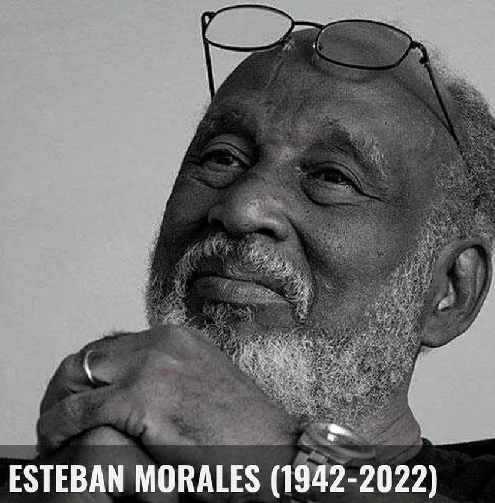

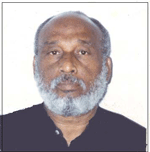 Esteban Morales Domínguez