
|
|
AfroCubaWeb
|
|
|
Articles/Articulos Un martes 13 de gloria, nace el Sexteto Nacional de Cuba, Por: Dr.C. Ricardo R. Oropesa Fernandez, 13 de diciembre de 2018 El más grande y universal. El Septeto Nacional de Piñeiro. 4/30/2016. Por Dr. C. Ricardo R. Oropesa Fernández Septeto Nacional Ignacio Piñeiro, en los Grammy Latinos 2013.
9/13 News
of the 2009 US Tour/Reviews
Excellent Performances of Cuban Traditional Groups in European Festivals, 9/06
Septeto Nacional De Ignacio Piñeiro 1978 -Suavecito 6/1/1978
YouTube |
Septeto Nacional de Cuba and Ignacio PiñeiroCuban sonero and composer Ignacio Piñeiro founded Septeto Nacional in 1927, as Columbia Records’ answer to RCA Victor’s popular Sexteto Habanero. Both groups added the trumpet, and so defined the classic septet sound. Today, third-generation descendants of Septeto Nacional continue to define Cuba’s consummate son tradition. Augmenting the septet’s sound and embellishing its classic repertoire are vocalists Pío Leyva, Caridad Cuervo and Bertha Portuondo, congüero Tata Güines, pianist Guillermo González Camejo "Rubalcaba" and tres master Pancho Amat. Their close renditions of two well-known Piñeiro compositions (No Juegues Con Los Santos, featuring Cuervo, and Coco Mai Mai, featuring Portuondo) sustain an intuitive interplay between the band’s three singers, the musicians and their guest counterparts. Lead singer Eugenio Rodríguez "Raspa" can turn a song inside out (e.g., Llora Como Llore, Quimera, Tu Mi Afinidad), while Leyva’s wicked, raspy 82-year-old baritone (as heard on the recent Afro Cuban All Stars) intertwines with Rubalcaba’s stylish piano in a compelling fashion. Un martes 13 de gloria, nace el Sexteto Nacional de Cuba, Por: Dr.C. Ricardo R. Oropesa Fernandez, 13 de diciembre de 2018 El más grande y universal. El Septeto Nacional de Piñeiro. 4/30/2016 AfroCubaWeb: Por Dr. C. Ricardo R. Oropesa Fernández - "La producción discográfica “El Septeto Nacional Ignacio Piñeiro, el más grande y universal” de la insigne agrupación musical cubana junto a la Casa Editora Musical Bis Music de la Compañía Artex, S.A. será presentado en breve, así anuncio José Manuel García, multipremiado productor discográfico cubano de la Casa Bis Music, elogiando el nuevo CD por el 89 aniversario de la agrupación musical “preámbulo a los festejos de los 90 onomástico el próximo año 2017” en que la casa Bis Music se sumara a tan importante acontecimiento al programa de festejos organizado por los directivos de la agrupación cubana, que esperan se sumen otras instituciones cubanas y extrajeras."
Septeto Nacional de Cuba to Perform with Orquesta Broadway 1/16/2016 Prensa Latina: "Septeto Nacional's latest recording, El Mas Grande y Universal (Bis Music), includes 14 tracks and is due to be released in March, although already can be purchased in digital version on several Internet platforms." Direct from Cuba, Septeto Nacional makes debut at Lehman 1/15/2016 Amsterdam News: "Music genius Ignacio Pineiro formed Septeto Nacional in 1927 in Central Havana. He was known for “Echale Salsita,” a recording wherein he put his trumpets in front and added it to percussion, vocals and strings to feature songs with ever-changing counter melody. The “Echale Salsita” recording ended up coining American-style son that became popular in New York in the 1960s and 1970s. The wildly prolific Cuban bassist and composer known as “El Poeta del Son” (“The Poet of Son”), Ignacio Pineiro Martinez passed in 1969. Since then, the group has seen an array of Cuban musical superstars pass through its ranks, including Carlos Embale, Bienvenido Granda, Abelardo Barroso and Miguelito Valdes. Presently, Eugenio “Raspa” Rodríguez and Francisco “El Matador” Oropesa carry Pineiro’s musical torch as leaders of the group. They continue with the original son and rumba sound while also incorporating elements of contemporary harmonization, wider rhythmic concepts and an exceptional repertoire that includes the most important Cuban hits, some written by Pineiro himself. " ¡Música al rojo vivo con el Septeto Nacional de Cuba! 1/13/2016 El Diario: "Desde La Habana vienen con mucha azúcar, candela, ron, y, claro, son. Es el Septeto Nacional de Cuba y este sábado 16 de enero se presenta en Lehman Center de El Bronx. A primera hora, el saladito lo pondrá la popular Orquesta Broadway de nuestra ciudad." Cuba’s Grammy-nominated Septeto Nacional de Cuba // San Francisco 1/13/2016 Latino Fresh: "Septeto Nacional, the Grammy-nominated Cuban Son group founded by master musician Ignacio Piñeiro, will play Brava for one Bay Area performance only on January 17th at 7:30pm… The fourth generation of the Septeto National can certainly stand up to comparison with the legendary band`s original line-up. All the musicians are excellent instrumentalists and inspired soneros, who play the fresh-sounding arrangements, as if a time machine had catapulted the original Septeto to this century, keeping close to the original Piñeiro sound." SEPTETO NACIONAL DE CUBA and ORQUESTA BROADWAY 12/20/2015 Jazz Corner: "Lehman Center for the Performing Arts is proud to present the legendary champion of Cuban son SEPTETO NACIONAL DE CUBA IGNACIO PIÑEIRO and the longest running charanga band outside of Cuba ORQUESTA BROADWAY on Saturday, January 16th, 2016 at 8pm. Septeto Nacional de Cuba, formed in 1927 by Ignacio Piñeiro, are the paragon interpreters of son cubano, a style of music and dance that originated in Cuba and gained worldwide popularity in the 1930s." More articles/Mas articulos HistoryAt the end of the 19th Century in the sugar cane and coffee plantations of the Cuban 'Oriente' region, two different music styles began to combine: the rhythms of Africa and the songs of Spanish heritage. The result was a new music: the Son Oriental whose popularity, in the
beginning, was limited to the rural areas of its origin. Officially it was
classified as frivolous and indecent. However, its fame spread quickly to the
urban neighbourhoods of the main cities in the region. At the beginning of the twenties Havana experienced a major influx of
orientales (people from 'Oriente') and due to their cultural influence Son
became more and more accepted in the Capital. The 'Habaneros' (people from
Havana) fell in love with the new rhythm and immediately put their peculiar
stamp on it, speeding up the tempo, and playing it with six musicians. This completely changed the sound and Son quickly became the most celebrated music in Cuba. Not long after, it also became well known outside the country. When in 1928 Son and Septeto Nacional were the sensation of the World Exposition in Sevilla. Son was here to stay and became the basis for many other music styles. like Mambo and Salsa. Today, after more than seventy years of success, the "Septeto Nacional" is still alive and kicking. Young gifted talents continue the tradition founded by Ignacio Piñeiro -- http://www.latincoolnow.com/product_info.php?products_id=1378 |

Un martes 13 de gloria, nace el Sexteto Nacional de Cuba 12/13/2018 AfroCubaWeb: "En esta fecha daremos a conocer algunos de los momentos mas importantes de la fundación de esta agrupación musical que comenzó un año antes por decisión de Ignacito Piñeiro y revelaremos públicamente algunos detalles poco difundidos hasta hoy del proceso, de las síntesis biográficas de los fundadores, así como mostraremos las imágenes del Expediente n° 6481 “Sexteto Nacional” 1927, celosamente custodiado en el Archivo Nacional de la República de Cuba."
Septeto Nacional Ignacio Piñeiro, una de las más genuinas agrupaciones soneras
del mundo 12/18/2017 AHS: "A sus 90 años de fundado el 13 de diciembre de
1927, esta agrupación preserva y difunde un amplio repertorio de obras musicales
de carácter antológico, creadas por su fundador Ignacio Piñeiro Martínez (1889-
1969) -conocido como el Poeta del Son- y de otros importantes compositores de
Cuba. se conformó como Septeto con la introducción de la trompeta. Los primeros
títulos creados fueron Cuatro Palomas, Ninfa del Valle y Esas no son Cubanas
entre sus más de 300 obras."
Noventa años con el Septeto Nacional Ignacio Piñeiro 11/14/2017 Granma: "El
próximo 13 de diciembre el Septeto Nacional de Cuba Ignacio Piñeiro arriba a su
aniversario 90. Para festejarlo han organizado un pequeño programa que incluye,
ese mismo día, un Gran Concierto al que han denominado Celebrando los 90, en el
teatro de variedades América a partir de las 8:00 p.m. A esta presentación se
les unirán Mandy Cantero, cantante de la orquesta Los Van Van; María Victoria
Rodríguez, máxima exponente de la música campesina; los soneros Gustavo Oliva y
William Borrego, así como el pianista Orlando «Landy» Pérez y Sixto «El Indio»
Llorente, de la orquesta Aragón."
Cuban
Music with Strong Presence in Latin Grammy Nominees 9/25/2016 Cubarte: "The
CDs Vivito y coleando, by la Charanga Habanera, El más grande y universal, by
the Septeto Nacional Ignacio Piñeiro and Canciones De Cri Cri "El Grillo
Cantor", by Omara Portuondo, are some of the productions nominated to the 17th
edition of the Latin Grammy Award."
Varios cubanos nominados al Grammy Latino 2016 9/21/2016 Cubadebate: "En
esta ocasión, la Academia incluyó en su selección oficial a diversas
agrupaciones cubanas como La Charanga Habanera, el Septeto Nacional Ignacio
Piñeiro y Gente de Zona; así como a los músicos Omara Portuondo, Leo Brouwer,
Francisco Céspedes, El B y Jacob Forever. Nuevamente los cubanos se apoderan de
la lista de nominados y ratifican las potencialidades musicales de esta Isla,
que es referente dentro del pentagrama continental."
El más grande y
universal. El Septeto Nacional de Piñeiro. 4/30/2016 AfroCubaWeb: Por Dr.
C. Ricardo R. Oropesa Fernández - "La producción discográfica “El Septeto
Nacional Ignacio Piñeiro, el más grande y universal” de la insigne agrupación
musical cubana junto a la Casa Editora Musical Bis Music de la Compañía Artex,
S.A. será presentado en breve, así anuncio José Manuel García, multipremiado
productor discográfico cubano de la Casa Bis Music, elogiando el nuevo CD por el
89 aniversario de la agrupación musical “preámbulo a los festejos de los 90
onomástico el próximo año 2017” en que la casa Bis Music se sumara a tan
importante acontecimiento al programa de festejos organizado por los directivos
de la agrupación cubana, que esperan se sumen otras instituciones cubanas y
extrajeras."
Septeto Nacional Ignacio Piñeiro anuncia nuevo disco 4/28/2016 Granma: "Un
nuevo disco del Septeto Nacional Ignacio Piñeiro, a cargo de Bis Music, de
Artex, se encuentra prácticamente listo para salir al mercado y ha sido
propuesto para su posible nominación en la Categoría de Música Tradicional por
esta disquera al Comité del Premio del 25 Festival Internacional del Disco
Cubano, Cubadisco 2016, que tendrá lugar el próximo mes de mayo."
Septeto Nacional de Cuba to Perform with Orquesta Broadway 1/16/2016 Prensa
Latina: "Septeto Nacional's latest recording, El Mas Grande y Universal (Bis
Music), includes 14 tracks and is due to be released in March, although already
can be purchased in digital version on several Internet platforms."
Direct from Cuba, Septeto Nacional makes debut at Lehman 1/15/2016 Amsterdam
News: "Music genius Ignacio Pineiro formed Septeto Nacional in 1927 in Central
Havana. He was known for “Echale Salsita,” a recording wherein he put his
trumpets in front and added it to percussion, vocals and strings to feature
songs with ever-changing counter melody. The “Echale Salsita” recording ended up
coining American-style son that became popular in New York in the 1960s and
1970s. The wildly prolific Cuban bassist and composer known as “El Poeta del
Son” (“The Poet of Son”), Ignacio Pineiro Martinez passed in 1969. Since then,
the group has seen an array of Cuban musical superstars pass through its ranks,
including Carlos Embale, Bienvenido Granda, Abelardo Barroso and Miguelito
Valdes. Presently, Eugenio “Raspa” Rodríguez and Francisco “El Matador” Oropesa
carry Pineiro’s musical torch as leaders of the group. They continue with the
original son and rumba sound while also incorporating elements of contemporary
harmonization, wider rhythmic concepts and an exceptional repertoire that
includes the most important Cuban hits, some written by Pineiro himself. "
Cuba’s Grammy-nominated Septeto Nacional de Cuba // San Francisco 1/13/2016 Latino
Fresh: "Septeto Nacional, the Grammy-nominated Cuban Son group founded by master
musician Ignacio Piñeiro, will play Brava for one Bay Area performance only on
January 17th at 7:30pm… The fourth generation of the Septeto National can
certainly stand up to comparison with the legendary band`s original line-up. All
the musicians are excellent instrumentalists and inspired soneros, who play the
fresh-sounding arrangements, as if a time machine had catapulted the original
Septeto to this century, keeping close to the original Piñeiro sound."
¡Música al rojo vivo con el Septeto Nacional de Cuba! 1/13/2016 El
Diario: "Desde La Habana vienen con mucha azúcar, candela, ron, y, claro, son.
Es el Septeto Nacional de Cuba y este sábado 16 de enero se presenta en Lehman
Center de El Bronx. A primera hora, el saladito lo pondrá la popular Orquesta
Broadway de nuestra ciudad."
Septeto Nacional & Orquesta Broadway Honoring "Chocolate" 12/20/2015 Jazz
Corner News: "Lehman Center for the Performing Arts is proud to present the
legendary champion of Cuban son SEPTETO NACIONAL DE CUBA IGNACIO PIÑEIRO and the
longest running charanga band outside of Cuba ORQUESTA BROADWAY on Saturday,
January 16th, 2016 at 8pm for a special concert to honor the legacy of the great
Cuban trumpeter Alfredo "Chocolate" Armenteros."
SEPTETO NACIONAL DE CUBA and ORQUESTA BROADWAY 12/20/2015 Jazz
Corner: "Lehman Center for the Performing Arts is proud to present the legendary
champion of Cuban son SEPTETO NACIONAL DE CUBA IGNACIO PIÑEIRO and the longest
running charanga band outside of Cuba ORQUESTA BROADWAY on Saturday, January
16th, 2016 at 8pm. Septeto Nacional de Cuba, formed in 1927 by Ignacio Piñeiro,
are the paragon interpreters of son cubano, a style of music and dance that
originated in Cuba and gained worldwide popularity in the 1930s."
Septeto Santiaguero a Grammy anglo. No es un run run 12/9/2015 TV
Santiago: "La noticia dio la vuelta al planeta en segundos, El Septeto
Santiaguero fue nominado al premio Grammy Anglo a entregarse en 2016. El Septeto
no la tiene fácil, en la categoría de Mejor álbum latino tropical están
nominados además: Rubén Blades con Roberto Delgado & Orquesta, Juan Luis Guerra,
el grupo Guaco y Víctor Manuelle."
La rumba, la conga y la clave ñáñiga en Ignacio Piñeiro (III) 4/30/2015 Cubarte: "El
prolífico músico y compositor habanero Ignacio Piñeiro Martínez
(21/05/1888-12/03/1969), ha trascendido a su tiempo. Gran compromiso tienen las
actuales generaciones de músicos cubanos con el “Pontífice de la rumba”, aquel
que vistió de gala nuestro folclor: la rumba, el son, la clave ñáñiga, la
guajira; que es decir, el corazón de la cultura cubana."
Rumba, conga and the ñañiga clef by Ignacio Piñeiro 2/5/2015 Cubarte: por
Ricardo Roberto Oropesa Fernández - "The prolific musician and composer Ignacio
Piñeiro Martínez (Havana, 1888-1969) has gone beyond his time. The current
generations of Cuban musicians have great a commitment "maestro of the rumba"
who enriched our folklore: rumba, son, the clef ñañiga and guajira; the most
traditional musical genre of the Cuban culture."
La rumba, la conga y la clave ñáñiga en Ignacio Piñeiro 9/29/2014 Cubarte: por
Ricardo Roberto Oropesa - "Pero Ignacio Piñeiro, desde principios de siglo,
venía viviendo de componer sones y guaguancós. Es por ello que fuera reconocido
por la prensa habanera y los músicos cubanos, en 1928, como “El poeta del son”,
atribuyéndosele ser pionero en la fusión de géneros, como el son. Una de esas
obras populares que llevan la fusión del guaguancó y el son fue estrenada en el
Garden Bar del Hotel Plaza, cuando el Septeto Nacional, en 1932, tocaba junto
con la orquesta Jazz Band de Moisés Simmons."
La rumba, la conga y la clave ñáñiga en Ignacio Piñeiro 9/29/2014 Cubarte: "Hoy
Cuba siente orgullo de Ignacio Piñeiro por su conocida contribución al son. Sí,
ese al que nadie como él supo “echarle la salsita”, donde cristalizó el más
bailable de los géneros musicales, el son habanero. Pero pocos reconocen su
aporte a la rumba, y es que él fue síntesis y semilla, por ascendencia
afro-ibérica, de nuestra cultura cubana."
Ignacio Piñeiro, hasta los ángeles bailan tu son 3/12/2014 Cubarte: por
Ricardo Roberto Oropesa Fernández - "Y precisamente eso es lo que le debe la
música cubana a Ignacio Piñeiro, fue él, le tocó hacer eso, tuvo la
sensibilidad, la formación, él transitó por la escuela primaria que fueron los
coros de clave, la secundaria que fueron los coros de guaguancó, y de pronto
llegó al preuniversitario que fueron los septetos y de ahí llegó a la
universidad donde fue el profesor egregio de la Universidad de la Música Cubana,
y su talento le dio no solo para estructurar el son, que con Piñeiro no es un
estribillo, no es un montuno, con Piñeiro es todo un cuerpo, tiene una
narrativa, una dramaturgia, tiene una estructura que sale de los cantos de los
coros de clave, de guaguancó, precisamente por eso tiene un texto largo, que
narra historias, porque Piñeiro era rumbero y era sonero."
La mujer cubana en el pensamiento musical de Ignacio Piñeiro 3/8/2014 Cubarte: por
Ricardo Roberto Oropesa Fernández - "La vida y obra del célebre músico,
compositor y director de agrupaciones musicales Ignacio Piñeiro Martínez (La
Habana, 21/05/1888 - 12/03/1969) estuvo caracterizada por un infinito amor a su
patria y en particular a la mujer cubana; sus rumbas y sones creados para
bailar, explícitamente contenían frases, nombres y poesías —en décimas o
cuartetas— referentes a la belleza, altruismo, valores morales y patrióticos de
nuestras mujeres."
The Voice of the Septeto Nacional: Carlos Embale, a Sensation that Fills Us 10/1/2013 Cuba
Now: "In hand-written biographical notes one reads that Carlos Embale had a
high-pitched voice with an ample register. That is true. But those words do not
convey the feeling that came from his voice, ideal for singing the son, capable
of entering the ear and settling in memory. Today, even without hearing him,
those of us who enjoyed listening to him continue to hear him in an interminable
son that he sang like few Cuban interpreters. He was and is one of the voices of
son in its full authenticity, without retouches or alterations."
Ignacio Piñeiro tiene ya su libro 7/28/2013 Diario de Cuba: "En realidad,
en este volumen se juntan dos extensas y detalladas biografías: la de ignacio
Piñeiro con su importantísimo aporte a la música cubana, y la de su obra magna,
el Septeto Nacional, vigente todavía a los 87 años de su creación. Todo esto
supone un extraordinario trabajo por parte de su autor, Ricardo R. Oropesa. Por
encima de detalles que hemos señalado, todos de carácter secundario en la
discografía, que es materia por demás difícil y escabrosa, se trata de un libro
muy importante en la discografía de la música cubana."
El Septeto Nacional Ignacio Piñeiro, 85 años de Son 5/21/2013 Cubarte: "De
lo que significa para sus actuales integrantes la celebración de 85 años de
historia en las actuales condiciones del escenario musical cubano e
internacional, el Septeto Nacional Ignacio Piñeiro responde algunas
interrogantes, con el afán de actualizar a los seguidores de esta longeva
agrupación sonera."
Septeto Nacional en la Feria del Libro de La Habana 2/17/2013 Sonfonia: ""Historia
del Septeto Nacional Ignacio Piñeiro", escrito por el investigador y doctor en
ciencias Ricardo Roberto Oropesa, saldrá a la luz en Feria Internacional del
Libro de La Habana 2013. El libro, revela momentos desconocidos de la vida de
Ignacio Piñeiro."
The Legacy of Cuban Son: An Interview with Frank Oropesa of Septeto Nacional
Ignacio Pineiro de Cuba 5/17/2011 Afropop Worldwide: "Ignacio Piñeiro was
born in a rumbero neighborhood and was initiated into the rumba and Abakuá
traditions from a very young age. He belonged to what is called the Efori Nkomon
sect. Piñeiro was raised on these African rhythms, and he was the one who
started to introduce elements of rumba into son. He began mixing these musical
forms and also started the Coros de Clave Ñañiga (Abakuá singing groups) in
Havana (ñañigo refers to a member of the Abakuá society)."
Alberto Nacif on Septeto Nacional de Cuba 4/4/2011 UMS Lobby: "The Septeto
Nacional de Cuba, which was founded in 1927 by Ignacio Pineiro (1888–1969),
contrabass player, singer, and composer will perform the real Cuban son, the
music of the Cuban countryside that took over dance halls and clubs alike in the
early 1930s. This music, which is the true progenitor of Salsa and is still
popular in both urban and rural settings, originated in Oriente, a province 600
miles from Havana and was a combination of African-derived instruments with
Spanish verse forms and stringed instruments. The son has syncopated rhythms and
catchy melodies and harmonies which make this a music to sing and dance to."
Septeto Nacional Ignacio Piñeiro, Legendary Cuban Son Septet to U.S. Tour 7/26/2010 Cuba
Headlines: "Septeto Nacional, the famed Cuban son group founded by music pioneer
Ignacio Piñeiro, will return for their second U.S. tour from September
1--September 20, 2010. The Septeto Nacional U.S. Tour 2010 promotes the group's
new album Sin Rumba No Hay Son, coming soon in late September from Harmonia
Mundi/World Village Records."
Cuban Musical Pioneers Celebrate an Island’s Soul 11/23/2009 NYT: "There’s
no antiquarian dust on Septeto Nacional Ignacio Piñeiro, the Cuban band that got
started in 1927 and performed on Thursday night at S.O.B.’s on its first
American tour in 76 years. The septet was a pioneer of the Cuban son (a dance
style; son means sound), which is a foundation of modern salsa in this
hemisphere and of Congolese soukous in Africa. The Septeto, which has replaced
all its musicians through the years — Piñeiro died in 1969 — still plays the
Piñeiro repertory. Its Cuban son, and its rumbas and boleros, are music of
transparency, tensile strength and phantom drive. Piñeiro’s innovation was to
add trumpet to the guitars, percussion and voices of previous son groups,
bringing songs an ever-changing countermelody and prefiguring salsa’s horn
sections. Piñeiro may well have named salsa music with his 1928 song “Échale
Salsita” (meaning “Throw a little sauce on it”), which started the septet’s
first set at S.O.B.’s."
Legendary Cuban Group Plays SF 11/23/2009 KTVU: "Founded by Pineiro in
1927, Septeto Nacional would become the standard bearer for son as the prolific
songwriter penned numerous hits for the group, drawing invitations to play
internationally including the Ibero American Fair in Seville, Spain, and the
1933 World Exposition in Chicago. By then, Septeto Nacional had earned such fans
as composer George Gershwin who became friends with Pineiro during a visit to
Cuba and even quoted one of the bandleader’s songs in his “Cuban Overture.” The
Septeto Nacional`s turn-over in musicians was so fast that one scarcely knew who
to expect on stage when the group performed live. Pineiro actually left his own
septet for financial reasons with Lazaro Herrera taking his place. Septeto
Nacional only managed to stay afloat for another two years, finally disbanding
in 1937. However, the popularity of the band would lead to future reformations
that by the late 1950s would become permanent."
Septeto Nacional de Ignacio Piñeiro at Yoshi's 11/22/2009 SF
Chronicle: ""What Piñeiro did was introduce the elements of rumba into the
popular dance music of Cuba," says Francisco Oropesa-Fernandez, who is Ricardo's
brother and plays bongos with the current Septeto Nacional. "He created a genre
called rumba son that added the clave (a two-bar rhythmic pattern that anchors
Afro-Cuban rhythm) to the son. In doing that, he brought in the elements of
Africa that drew from his own roots in the Santeria Abakua religion."
Septeto Nacional de Ignacio Piñeiro: "The Inventors of Salsa" 11/20/2009 AfroFunk
Opening Arms and Ears to Cuban Music 11/18/2009 NYT: "The Cuban band
Septeto Nacional de Ignacio Piñeiro can legitimately claim to be inventors of
salsa. But it last played in the United States when Franklin D. Roosevelt was
president, and there was no telling when it might be able to return — until the
very slightest hint of a thaw in cultural relations between the United States
and Cuba quietly brought the band to New York early this month."
After 76 years, a return engagement for Cuba's Septeto Nacional 11/4/2009 NY
Daily News: "Cuba’s Septeto Nacional Ignacio Piñeiro, a revered 83-year-old son
ensemble that last played in the U.S. at the Chicago World’s Fair in 1933, is
making a grand return to the Bronx on Saturday. “It means a lot to go to the
U.S. to make our contribution to Cuba’s traditional music,” bongo player and
producer Frank (El Matador) Oropesa, who joined the Septeto 15 years ago, said
from Havana last week. Oropesa, 49, is part of the fourth generation of
musicians who have kept the Septeto going for more than 80 years, drawing on the
repertoire of more than 600 themes from their founder, Cuban son master Ignacio
Piñeiro, who died in 1968. “We retain the same anthological songs that became a
symbol of those times, like ‘Échale Salsita,’ ‘Bardo,’ ‘Esas No Son Cubanas’ ...
and we are going there to surrender all our energy for Cuban music,” Oropesa
added. After Saturday’s concert at Hostos Center for the Arts & Culture, the
seven musicians, a dancer and a sound technician will travel to San Juan,
Chicago, Los Angeles and San Diego."
El Septeto Nacional recibe visado de Washington para actuar en Nueva York 10/22/2009 Cuba
Encuentro: "El Septeto Nacional, uno de los más importantes representantes de
música tradicional cubana, recibió visado de Washington para actuar en Nueva
York, informó la AP. "El legendario y clásico Septeto Nacional Ignacio Piñeiro
presentará un concierto exclusivo en la ciudad de Nueva York", anunció en un
comunicado de prensa Wally Egecombe, director del Centro de Arte y Cultura
Hostos de esa ciudad estadounidense. El espectáculo se realizará el 7 de
noviembre en el anfiteatro de la institución con sede en el condado del Bronx, y
será el primero de músicos cubanos desde 2003, cuando Washington comenzó a negar
las visas a artistas de la Isla, en el marco de una política de endurecimiento
de las sanciones a Cuba."
El Septeto Nacional de Ignacio Pineiro - Echale salsita 8/31/2009 YouTube: recent
video
El Septeto
Nacional de Ignacio Pineiro - El guanajo relleno 8/19/2009 You Tube: an old
video, classic.
SEPTETO NACIONAL (Cuba 1920-....) SongoroCosongo 6/14/2008 YouTube: classic
SEPTETO NACIONAL GOING FOR SALSA 5/7/2007 Granma: "The Septeto Nacional
Ignacio Piñeiro is celebrating its 80th anniversary, following a career laden
with national and international triumphs. Piñero’s music, together with that of
Matamoros, is among the most widely circulated danceable Cuban son music. This
is a schooled group that had legions of beautiful son music lovers dancing.
Piñeiro seasoned the stew of Cuban and Latin salsa with their song “Échale
salsita”. The Septeto Nacional has a broad program of events organized for this
year. EGREM has released a new album Noche de conga (Conga Night) and the
Tropicana Internacional magazine has just launched its latest issue dedicated to
Ignacio Piñeiro."
Ignacio Piñeiro, creador de sones, rumbas y claves ñáñigas 6/25/2005 Jiribilla
FESTIVAL: In Havana, Contradiction Reigns 12/20/2002 Indiewire: "The
one-hour "Nosotros, la Musica" (We Are the Music) is a 38-year-old,
black-and-white freeform musical variety show peppered with infusions of French
New Wave form, cinema verite, and seminal Cuban documentarian Santiago Alvarez,
and a soupcon of revolutionary fervor. First-time filmmaker Rogelio Paris, now
66, honors anonymous singers and dancers on the streets of poor barrios with the
same gusto he bestows upon such well-known musicians as songwriter/pianist Benny
More and chanteuse Elena Burke, established nightclub acts of costumed dancers
doing the rhumba, and groups such as el Septeto de Ignacio Pineiro."

En
su 85. Aniversario nuevamente nominado el Septeto Nacional junto a la
multipremiada Casa Discográfica Cubana Bis Music.
La Habana tiene Son, álbum doble CD-DVD es la más reciente producción
discográfica en su 85 aniversario de la fundación del Septeto Nacional del
insigne maestro Ignacio Piñeiro y la celebración del 20 cumpleaños de Bis Music.
La Producción general de Francisco “El Matador” Oropesa y Eugenio Rodriguez,
director Musical, bajo el ojo visor de Jose Manuel Garcia y Ela Ramos, este
producto se clasifica entre los mejores del mundo al ser nominado al premio
Grammy Latino 2013, prestigio bien ganado por la actual generación de la
agrupación sonera, que sin grandes recursos, más que su talento, son capaces de
entregarnos según José Reyes Fortún : Como una pequeña joya artística de la
música popular bailable de todos los tiempos, puede ser considerado este disco
por los amantes del arte musical cubano. Con una ligera mirada desde la
musicología, La Habana tiene su Son, disco que hoy nos convoca, preserva la
sonoridad y tímbrica histórica del Septeto Nacional Ignacio Piñeiro, para
revelar una singularidad rítmico-melódica de alto vuelo conceptual, excelente
arsenal polirritmico y politimbrico y una especial interpretación de un conjunto
de músicas envueltas en un amplio y admirable empaque estético.
La 14. Entrega Anual del Grammy Latino a celebrarse el 21 y 22 de noviembre
coincide con la presencia, por 5. ocasión, en los Estados Unidos, de nuestro más
universal de los Septetos de Sones, El Septeto Nacional Ignacio Piñeiro.
Reporto: Ricardo R. Oropesa
 Legendary
Cuban Group Plays SF 11/23/2009 KTVU: "Founded by
Pineiro in 1927, Septeto Nacional would become the standard bearer for son as
the prolific songwriter penned numerous hits for the group, drawing invitations
to play internationally including the Ibero American Fair in Seville, Spain, and
the 1933 World Exposition in Chicago. By then, Septeto Nacional had earned such
fans as composer George Gershwin who became friends with Pineiro during a visit
to Cuba and even quoted one of the bandleader’s songs in his “Cuban
Overture.” The Septeto Nacional`s turn-over in musicians was so fast that one
scarcely knew who to expect on stage when the group performed live. Pineiro
actually left his own septet for financial reasons with Lazaro Herrera taking
his place. Septeto Nacional only managed to stay afloat for another two years,
finally disbanding in 1937. However, the popularity of the band would lead to
future reformations that by the late 1950s would become permanent."
Legendary
Cuban Group Plays SF 11/23/2009 KTVU: "Founded by
Pineiro in 1927, Septeto Nacional would become the standard bearer for son as
the prolific songwriter penned numerous hits for the group, drawing invitations
to play internationally including the Ibero American Fair in Seville, Spain, and
the 1933 World Exposition in Chicago. By then, Septeto Nacional had earned such
fans as composer George Gershwin who became friends with Pineiro during a visit
to Cuba and even quoted one of the bandleader’s songs in his “Cuban
Overture.” The Septeto Nacional`s turn-over in musicians was so fast that one
scarcely knew who to expect on stage when the group performed live. Pineiro
actually left his own septet for financial reasons with Lazaro Herrera taking
his place. Septeto Nacional only managed to stay afloat for another two years,
finally disbanding in 1937. However, the popularity of the band would lead to
future reformations that by the late 1950s would become permanent."
Cuban
Musical Pioneers Celebrate an Island’s Soul 11/23/2009 NYT: "There’s
no antiquarian dust on Septeto Nacional Ignacio Piñeiro, the Cuban band that
got started in 1927 and performed on Thursday night at S.O.B.’s on its first
American tour in 76 years. The septet was a pioneer of the Cuban son (a dance
style; son means sound), which is a foundation of modern salsa in this
hemisphere and of Congolese soukous in Africa. The Septeto, which has replaced
all its musicians through the years — Piñeiro died in 1969 — still plays
the Piñeiro repertory. Its Cuban son, and its rumbas and boleros, are music of
transparency, tensile strength and phantom drive. Piñeiro’s innovation was to
add trumpet to the guitars, percussion and voices of previous son groups,
bringing songs an ever-changing countermelody and prefiguring salsa’s horn
sections. Piñeiro may well have named salsa music with his 1928 song “Échale
Salsita” (meaning “Throw a little sauce on it”), which started the
septet’s first set at S.O.B.’s."
Septeto
Nacional de Ignacio Piñeiro at Yoshi's 11/22/2009 SF
Chronicle: ""What Piñeiro did was introduce the elements of
rumba into the popular dance music of Cuba," says Francisco Oropesa-Fernandez,
who is Ricardo's brother and plays bongos with the current Septeto Nacional.
"He created a genre called rumba son that added the clave (a two-bar
rhythmic pattern that anchors Afro-Cuban rhythm) to the son. In doing that, he
brought in the elements of Africa that drew from his own roots in the Santeria
Abakua religion."
Septeto
Nacional de Ignacio Piñeiro: "The Inventors of Salsa" 11/20/2009 AfroFunk
Opening
Arms and Ears to Cuban Music 11/18/2009 NYT: "The
Cuban band Septeto Nacional de Ignacio Piñeiro can legitimately claim to be
inventors of salsa. But it last played in the United States when Franklin D.
Roosevelt was president, and there was no telling when it might be able to
return — until the very slightest hint of a thaw in cultural relations between
the United States and Cuba quietly brought the band to New York early this
month."
After
76 years, a return engagement for Cuba's Septeto Nacional 11/4/2009 NY
Daily News: "Cuba’s Septeto Nacional Ignacio Piñeiro, a revered
83-year-old son ensemble that last played in the U.S. at the Chicago World’s
Fair in 1933, is making a grand return to the Bronx on Saturday. “It means a
lot to go to the U.S. to make our contribution to Cuba’s traditional music,”
bongo player and producer Frank (El Matador) Oropesa, who joined the Septeto 15
years ago, said from Havana last week. Oropesa, 49, is part of the fourth
generation of musicians who have kept the Septeto going for more than 80 years,
drawing on the repertoire of more than 600 themes from their founder, Cuban son
master Ignacio Piñeiro, who died in 1968. “We retain the same anthological
songs that became a symbol of those times, like ‘Échale Salsita,’ ‘Bardo,’
‘Esas No Son Cubanas’ ... and we are going there to surrender all our energy
for Cuban music,” Oropesa added. After Saturday’s concert at Hostos Center
for the Arts & Culture, the seven musicians, a dancer and a sound technician
will travel to San Juan, Chicago, Los Angeles and San Diego."
El
Septeto Nacional recibe visado de Washington para actuar en Nueva York 10/22/2009 Cuba
Encuentro: "El Septeto Nacional, uno de los más importantes
representantes de música tradicional cubana, recibió visado de Washington para
actuar en Nueva York, informó la AP. "El legendario y clásico Septeto
Nacional Ignacio Piñeiro presentará un concierto exclusivo en la ciudad de
Nueva York", anunció en un comunicado de prensa Wally Egecombe, director
del Centro de Arte y Cultura Hostos de esa ciudad estadounidense. El espectáculo
se realizará el 7 de noviembre en el anfiteatro de la institución con sede en
el condado del Bronx, y será el primero de músicos cubanos desde 2003, cuando
Washington comenzó a negar las visas a artistas de la Isla, en el marco de una
política de endurecimiento de las sanciones a Cuba."
Texto y foto Idelenia Hernández, Radio Cadena Habana
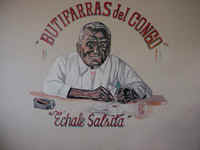 Data
de la década de los años treinta del pasado siglo veinte el pregón de un
negro congo que por las calles de un poblado habanero repetía a cualquier
hora del día o la noche: Salsa, salsita, para invitar a moradores y transeúntes
a comprar las butifarras que tártara en mano, el pregonero vendía.
Data
de la década de los años treinta del pasado siglo veinte el pregón de un
negro congo que por las calles de un poblado habanero repetía a cualquier
hora del día o la noche: Salsa, salsita, para invitar a moradores y transeúntes
a comprar las butifarras que tártara en mano, el pregonero vendía.
Años después, el Septeto Nacional
de Ignacio Piñeiro, durante una actuación a la salida de ese poblado rural,
fue convocado a probarlas, y sus músicos, hechizados por el sabor, se
inspiraron llevando al pentagrama el tradicional suceso, promocionando así en
toda Cuba y en el extranjero las butifarras, cuya salsa nadie podía igualar.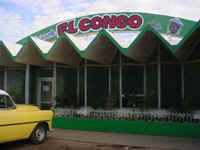
Mezcladas las carnes de res y de cerdo, sólo ese personaje, llamado el Congo, dominaba la receta del sazón exacto que daba a la butifarra de Catalina de Güines la verdadera autenticidad. Cuentan entonces pobladores de esa localidad que, al morir el creador, sólo una de sus hijas -la Negra Colasa- fue capaz de prepararlas, mientras el resto de la familia construyó, entonces, un restaurante.
En la actualidad, los habaneros elaboran el embutido, en el poblado güinero, con un sazón auténtico y una salsa que satisface el gusto de coterráneos y visitantes, manteniendo vivo aquello de que el secreto de las butifarras pertenece al Congo.
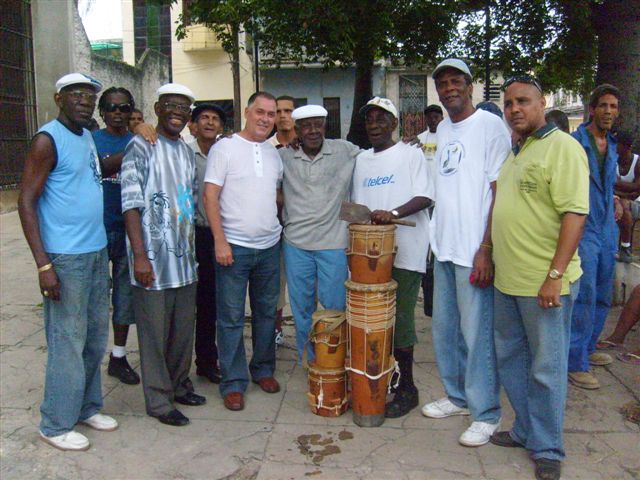
Homenaje for Ignacio Piñeiro
in Jesus Maria, an abakwa barrio in Havana
This was filmed in a documentary by an Italian company, due out in June
2009
Left to right: El Goyo Hernandez, Pedrito El Yuma, Frank Oropesa, bongocero for el Septeto
Nacional de Ignacio Pineiro, El Negro Bonko de Ibonda, Palillo Bonko de Mutanga, Ismael Bonko de Ikanfioro.
All are abakwa musicians.
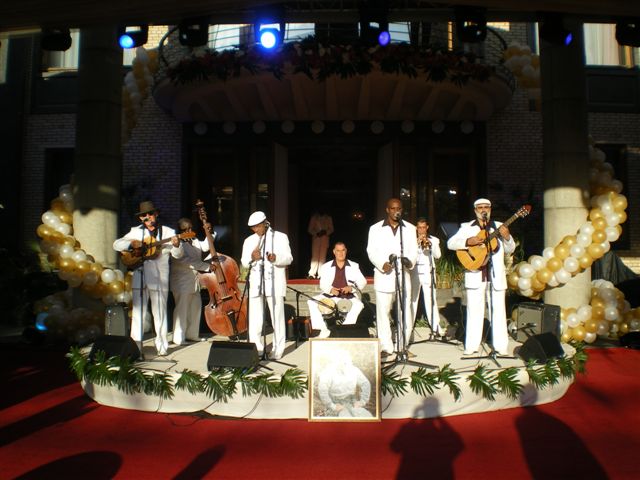
En Moscu, USSR

Frank Oropesa y Ray Baretto
Festival Toros y salsa en Dax- Francia
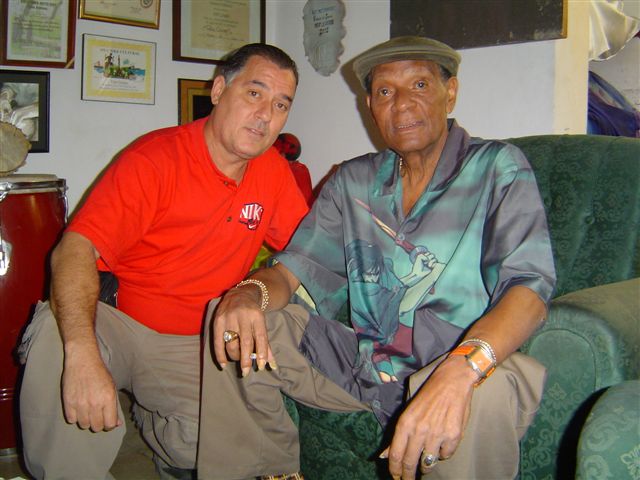
Frank Oropesa y Tata Guines
2016 Tour
1/16/2016 New York, Lehman Center, the Bronx
1/17/2016 San Francisco, Brava Theater. 2781 24th Street, San Francisco, CA 94110 Buy Tickets! Prices: Reserved Seating: $35/45, Vip Seating: $100 (includes post-show reception).
2011 Tour
3/31/2011 Piper Repertory Theater at Mesa Arts Center
Phoenix, AZ, US
2010 Tours
2009 Tours
AfroCubaWeb has just learned (9/23/09) that Septeto Nacional has received their US visas for this tour.
SEPTETO NACIONAL
Direct from Cuba
TOUR 2009
The legendary Cuban son group, Septeto Nacional, founded by music pioneer Ignacio Piñeiro, will tour the U.S. and Caribbean from October 27 - December 1st, 2009.
Tour dates can be found on Facebook. Please join the SEPTETO NACIONAL group page to receive updates on performances scheduled for your city. You'll find a history of the group along with current photos and concert videos. Join us today!
Presenters and promoters; there are a few remaining tour dates! Contact us today for details and availability. This is a unique opportunity to present one of the world's most vibrant musical treasures.
Contact:
Leo Tizol
Tour Director / Artist Manager
Leo Tizol Presents
phone: 917-687-2486
mundolibremusic_AT_aol.com [replace _AT_ with @]
Daria Sanchez
Tour Coordinator / Assistant Artist Manager
DLS Arts Management
phone: 917-771-1203
Daria_AT_DLSArtsManagement.com [replace _AT_ with @]
Info_AT_DLSArtsManagement.com
2006 Tours
The Grammy nominated SEPTETO NACIONAL Ignacio Pineiro
www.SeptetoNacional.com
is available for concerts, festivals and special events in 2006
we are planning two European tours in 2006:
2006 Spring tour - between April 06 and May 13
2006 Summer tour - between June 18 and August 8
promo materials and music on request
visit Septeto Nacional website - www.SeptetoNacional.com
Best
Beata Beben and Dariusz Startek
Septeto Nacional Management and concerts.pl
ul. Tytusa 14 A / 1
72-006 Szczecin - Mierzyn
Poland
ph./fax: +48.91.4810169
mobile: +48.503.173959 (Beata)
mobile: +48.601.881125 (Dariusz)
info@SeptetoNacional.com
http://www.concerts.pl/septeto_nacional/
 |
El
Son De Altura 1998 International Music Click here to listen to sample tracks and to buy ==>  |
 |
Son Le La Loma Original Release Date: 1999 International Music Click here to buy ==> |
 |
Mas Cuba Libres Original Release Date: 1999 Network Click here to buy ==> |
| Granma, as translated for Boletin Cubarte French Journal Le Progress described the performances of the Cuban National Septet and the Afro Cuban All Stars as "a Cuban success", during the 26th Edition of the Vienne Jazz Festival, held in France. This cultural event counted with the participation of notorious cultural personalities such as George Benson, Gilberto Gil and the Lincoln Center´s Orchestra, directed by Wynton Marsalis. Juan de Marcos, author of the successful project Buenavista Social Club and director of the Afro Cuban, offered to and audience of more than 8 000 what he named " the flavor of the tradition ", an outstanding musical group similar to the Cuban National Septet. The latter took the opportunity to present its last CD entitled A Conga Evening, produced by EGREM -the Cuban Recording Company- on the occasion of the 80th anniversary of the group that will take place next year. The Cuban Septet also performed at the International Festival of Sardinia, in Calagonne, together with Chucho Valdés and his quartet; and at the 7th Cuban Festival Seyne-Sur Mer, in Toulon, with NG the Band, Isaac Delgado and Manolito Simonet y su Trabuco. In addition, they played during the Geneva´s Holidays, together with Cesaria Évora, from Cape Verde at Mataros´ Festival, in Catalonia, with X Alfonso, Jose Mercé, and the Algerian Khaled -popular known as the king of the raí-; at the Jazz Parade La Liberte, in Friburgo, Switzerland; at the International Festival of Ethnic Music, in Naples, Italy; and finally, at the South Festival of Latin-American Culture, in Reutlingen, Germany. For Eugenio Rodríguez -alias El Raspa, director and vocalist of the group, and Frank Oropesa -alias El Matador, the Septet´s percussionist, the most exciting thing was the presentation made by tres-guitar Juan de Marcos. Juan told the audience how he learnt the secrets of Cuban music with this group, thanks to the generosity of Lázaro Herrera and Rafael Ortiz, main consultants of the Sierra Maestra musical group, that he directed. |
/EnlacesReview of Mas Cuba
www.rootsworld.com/reviews/mas-cuba.html
en.wikipedia.org/wiki/Ignacio_Pi%C3%B1eiro
FESTIVAL: In Havana, Contradiction Reigns 12/20/2002 Indiewire: "The one-hour "Nosotros, la Musica" (We Are the Music) is a 38-year-old, black-and-white freeform musical variety show peppered with infusions of French New Wave form, cinema verite, and seminal Cuban documentarian Santiago Alvarez, and a soupcon of revolutionary fervor. First-time filmmaker Rogelio Paris, now 66, honors anonymous singers and dancers on the streets of poor barrios with the same gusto he bestows upon such well-known musicians as songwriter/pianist Benny More and chanteuse Elena Burke, established nightclub acts of costumed dancers doing the rhumba, and groups such as el Septeto de Ignacio Pineiro."
Dr.C. Ricardo Roberto Oropesa Fernández
Sexteto Habanero Tribilin Cantore 1925 Foto - beautiful, classic african cuban
Sexteto Habanero Tres Lindas Cubanas 1928 - que lindo, muy africano
El
Septeto Nacional de Ignacio Pineiro - Echale salsita 8/31/2009 recent
video
El Septeto
Nacional de Ignacio Pineiro - El guanajo relleno 8/19/2009 an old video, classic.
SEPTETO
NACIONAL (Cuba 1920-....) SongoroCosongo 6/14/2008 classic
Ignacio Pineiro, Donde estabas anoche (Tito Rodriguez). Avisale a mi contrario. SongoCorosongo (Hector Lavoe).
ESAS NO SON CUBANAS...SEPTETO NACIONAL DE CUBA
[AfroCubaWeb] [Site Map] [Music] [Arts] [Authors] [News] [Search this site]
