
|
|
AfroCubaWeb
|
|
|
Link/Enlaces
|
|
Libro para descargar: Reyita, sencillamente de Daysi Rubiera 3/8/2020 Negra
Cubana: "En el año 1996 salió a la luz el libro Reyita, sencillamente, de la
escritora e historiadora afrocubana Daysi Rubiera Castillo, el cual es el
testimonio de Maria de los Reyes Castillo, madre de la también historiadora. El
libro, que recibió mención en el concurso literario de Casa de las Américas, en
la categoría testimonio en 1996, ha sido considerado un paradigma de la historia
oral en Cuba. Desde entonces, se ha utilizado como bibliografía en varias
universidades de Estados Unidos y Europa fundamentalmente y ha sido reeditado en
cuatro ocasiones en Cuba."
Afrocubanas: YOUR INPUT IS NEEDED: PROFESSORS, LATIN AMERICANISTS, CUBANISTS-
PLEASE READ & COMMENT 4/4/2019 Devyn Spence Benson: "I am in the process of
negotiating with a press the publication of an English translation of Daisy
Rubiera and Ines Maria Martiatu Terry's 2011 Afrocubanas: historia, pensamiento
y prácticas culturales (Afro-Cuban Women: History, Thought, and Cultural
Practices). I am super excited that this groundbreaking book will come out in
translation March 2020. The question I have for you all is would you assign this
book in your class? And if so, what class? The press wants to wait 18 months to
release the paperback unless I can prove that folks will adopt it for their
classes despite it being an edited collection."
Daysi Rubiera: “Afrocubanas” es una actitud ante la vida 10/9/2018 Negra
Cubana: "La intelectual cubana Daysi Rubiera Castillo ha escrito (finalmente) la
historia del Grupo Afrocubanas, las acciones que ha realizado; se detiene además
en los libros que se han publicado. La importancia de que Daysi haya decidido
dedicar unas líneas a este asunto radica en, precisamente, el rol que han
asumido las mujeres aforcubanas dentro del feminismo cubano, por mucho que se
les invisibilice, especialmente en los últimos 10 años. Daysi Rubiera ha sido
parte fundamentalmente de esa labor intelectual y de activismo negro y este
documento que les comparto da cuenta de ello."
Daysi Rubiera: otra reina coronada por el Club del Espendrú 4/8/2018 Negra
Cubana tenía que ser: "Gracias, Daysi Rubiera, por tu entrega, modestia y
sabiduría. Por tu respeto a los jóvenes, tu cariño a la verdad y tu pasión por
una historia de nosotros mismos mejor contada. El Club del Espendrú te agradece
y te abraza. Amor y respeto. Siempre."
Las cabezas coronadas agasajan a Daysi 3/29/2018 UNEAC: "El pasado 22 de
marzo, el Club del Espendrú, en su espacio Cabezas Coronadas del Centro Cultural
Cubapoesía homenajeó a la historiadora, escritora e investigadora Daysi Rubiera
Castilo quien, en palabras de Roberto Zurbano, es una de las imprescindibles en
la lucha constante por los derechos de la mujer, por la erradicación del racismo
solapado o evidente que pervive en nuestra sociedad a pesar de el proyecto
social que ha generado la Revolución."
Tres obras afincadas en la cubanidad 8/11/2017 UNEAC: por Astrid Barnet -
"Mañana de lujo, esta del mes de agosto, con la presentación en el habanero
Centro Cultural Dulce María Loynaz de los libros Lágrimas Negras, de Eliseo
Altunaga; Por una Cuba negra: literatura, raza y modernidad en el siglo XIX, de
Alberto Abreu, y Emergiendo del silencio. Mujeres negras en la historia de Cuba,
de Deysi Rubiera y Ohilda Hevia."
Cuba ante los desafíos del “Decenio para los Afro-descendientes” 5/18/2017 Cuba
Posible: "Un aspecto que llamó mucho mi atención en esta crónica de González es
el tratamiento de la población negra como una minoría en Cuba, tomando como
referencia los datos estadísticos del Censo de Población y Vivienda de 2012.
Resulta muy cuestionable que sólo el 9,3 por ciento de los cubanos tenga la piel
negra y un 26,6 por ciento se considere mestizo. Basta caminar por las calles de
nuestro país para comenzar a cuestionar tales resultados porcentuales. Es muy
importante tener en cuenta que las personas podían autodefinirse en el Censo
sobre la base de tres categorías de color de la piel previstas: blancos, negros
y mestizos. Por eso, Rubiera propuso la socialización de estadísticas por color
de la piel y género para resaltar los avances y perfilar los desafíos a
enfrentar para el mejoramiento humano en la coyuntura del “Decenio para los
Afro-descendientes” y después también."
Recordando a Lalita, de Daisy Rubiera 1/7/2017 Afromodernidades: "Emergiendo
del silencio: mujeres negras en la Historia de Cuba, es el título del nuevo
libro del Grupo Afrocubanas y su presentación será nuestro merecido homenaje en
el nuevo aniversario de la muerte, de Inés María Martiatu, Lalita, una de sus
fundadoras."
Emergiendo del silencio: mujeres negras en la historia de Cuba. 12/8/2016 Negra
Cubana: "Compilación de trabajos realizados por Daisy Rubiera e Oilda Hevia, que
arrojan una luz nueva sobre procesos históricos claves en Cuba."
Afrocubanas: un grupo, un proyecto, un sueño, un reto 12/8/2016 Desde la
Ceiba: por Daisy Rubiera Castillo, p 102 - "Una mañana del 2011, de un mes que
ahora no recuerdo, pues han transcurrido cinco años, Inés María Martiatu, Sandra
Abd´Allah-Álvarez, Carmen González, Paulina Márquez y yo, decidimos, hacer algo
que rompiera el silencio que sobre las mujeres negras se había mantenido
históricamente en la historiografía cubana."
El libro de MAGIN 10/19/2015 Negra Cubana: Por Zaida Capote Cruz - "Hace un
par de días una amiga me regaló MAGIN. Tiempo de contar esta historia, de Daisy
Rubiera y Sonnia Moro.1 Es grande la alegría de ver por fin el libro hecho,
palpable."
Seguiremos el camino 6/6/2015 Afrocubanas: Por Daysi Rubiera - "Hace
aproximadamente dos años, tres, para mí, importantes mujeres: Maritza, Hildelisa
y Damayanti me invitaron a la inauguración de la Red Barrial Afrodescendiente.
Espacio de reflexión y diálogo antiimperialista, anticapitalista y
antihegemónico, emprendería acciones encaminadas a un mayor reconocimiento y
valoración social de las y los afrodescendiente. Me llamó mucho la atención oír
los objetivos que se estaba trazando aquel grupo, de la necesidad de capacitar a
sus integrantes para que pudieran captar las nuevas formas de discriminación
racial, para su identificación y enfrentamiento que, a raíz de la crisis
económica que vivió y aún vive el país, comenzaron a instalarse en la sociedad
cubana."
Afrofeminismo: pensamiento y discurso afrofeminista cubano 6/5/2015 Negra
Cubana: Por Daisy Rubiera Castillo - "Tratar el tema del afrofeminismo,
pensamiento y discurso afrofeminista en Cuba, en el ámbito académico es un reto;
por un lado, porque en la atención que se le ha dado al estudio del movimiento
feminista en nuestro país, lo más conocido es la historia del protagonizado por
mujeres blancas, burguesa y de clase alta y media. De ahí que no se le haya
dedicado espacio al rol desempeñado por las mujeres negras, en algún momento de
la historia del mismo; por otro lado, por la carencia de bibliografía, y que
gracias a los estudios de reconstrucción histórica llevados a cabo en los
últimos tiempos, se encuentran obras sobre la experiencia de las mujeres negras
cubanas afrodescendientes, que van formando parte de un material disponible para
el estudio sobre su rol, su forma de pensamiento y el activismo feminista
afrodescendiente."
Sexo, sudor y lágrimas. Un acercamiento a los estudios que intersectan las
categorías de raza y género 5/1/2015 Perfiles: "Es debido a ello que
adquieren singular relevancia los textos compilados en el volumen Afrocubanas:
historia, pensamiento y prácticas culturales compilados por Daisy Rubiera
Castillo e Inés María Martiatu Terry. Entre los más interesantes cabría
mencionar: “Parece blanca” de Sandra del Valle, “Género y Racialidad: una
reflexión obligada en la Cuba de hoy”, de Yulexis Almeida Junco, “En torno a los
estereotipos respecto a la afrocubana: construcción y deconstrucción de mitos”,
de María Ileana Faguada Iglesias, “Propuesta de una mirada incluyente y no
sexista: Las mulatas ¿un invento profanado?”, de Onelia Chaveco Chaveco, “La
habitación propia de la negra cubana” de Yesenia Selier Crespo, “El imaginario
femenino negro en Cuba”, de Aymée Rivera Pérez, “El negrito y la mulata en el
vórtice de la Nacionalidad” de Inés María Martiatu Terry, y “Un análisis
léxico-semántico del discurso sobre la mujer en el rap cubano”, de Yanelys Abreu
y Anette Jiménez Marata. Resalto estos entre otros trabajos porque se centran en
las representaciones sociales que sobre la mujer negra y mulata se tiene en la
sociedad cubana. A todos ellos les interesa echar luz sobre la tremenda
racialización que está presente en nuestra visión del mundo."
Cuba: Estereotipos racistas asoman desde el hogar 2/25/2015 Al Momento,
Mexico: "“Adelanta la raza”, “el pelo lacio es más bonito”, “no me traigas ni un
mulato”, “las negras no son para casarse” o “tenía que ser negro” son frases que
se han repetido por generaciones en las familias cubanas como expresión de
prejuicios racistas vigentes en la isla caribeña. Especialistas aseguran que la
familia resulta un espacio esencial para la transmisión de patrones
discriminatorios por color de la piel y, en el caso de las mujeres negras y
mestizas, estos se concretan en una violencia simbólica constante por no
coincidir con el canon occidental de belleza. “Desde la educación de niños y
niñas se aprenden comportamientos racistas que luego, en la adultez, es más
difícil romper”, apuntó la historiadora Daisy Rubiera en la más reciente edición
de la tertulia “Reyita”, del grupo feminista Afrocubanas, realizada el pasado 20
de febrero en el Memorial Salvador Allende de La Habana."
Cuba y la discriminación por género y raza 2/24/2015 IPS: "Según la
académica Daysi Rubiera, lideresa de esta lucha en este país caribeño, la
movilización comunitaria y la obtención de políticas públicas para acortar
desventajas de poblaciones negras y mestizas deberían representar el foco de los
grupos de la sociedad civil que luchan contra el racismo, durante el Decenio
Internacional de los Afrodescendientes, que comenzó este año. “Las
discriminaciones por género y raza se están manifestando en todos los espacios
de la sociedad cubana, no solo en el acceso al empleo y los recursos o al
interior del hogar, sino en el comportamiento social de hombres y mujeres”,
opinó la historiadora de 76 años, fundadora del grupo feminista Afrocubanas,
durante una entrevista con IPS."
Cuba requiere actualizar lucha contra nuevas formas de racismo 2/23/2015 IPS: "Según
la académica Daysi Rubiera, lideresa de esta lucha en este país caribeño, la
movilización comunitaria y la obtención de políticas públicas para acortar
desventajas de poblaciones negras y mestizas deberían representar el foco de los
grupos de la sociedad civil que luchan contra el racismo, durante el Decenio
Internacional de los Afrodescendientes, que comenzó este año. “Las
discriminaciones por género y raza se están manifestando en todos los espacios
de la sociedad cubana, no solo en el acceso al empleo y los recursos o al
interior del hogar, sino en el comportamiento social de hombres y mujeres”,
opinó la historiadora de 76 años, fundadora del grupo feminista Afrocubanas,
durante una entrevista con IPS."
¿Hay un movimiento afrodescendiente en Cuba? 11/25/2014 Diario de
Cuba: "Como anunciaba el programa de la Primera Jornada Cubana contra el
Racismo, el martes 18 de noviembre tuvo lugar el panel "Movimientos
afrodescendientes en América Latina y el Caribe en el siglo XXI", en la Casa de
la Poesía, ubicada en La Habana Vieja. Bárbara Danzié, historiadora del Archivo
Nacional, fungió como moderadora, y los panelistas fueron Daysi Rubiera, Roberto
Zurbano y Tomás Fernández Robaina, quienes hicieron sus presentaciones en ese
orden."
Proyecto Afrocubanas, algo más que un libro 11/18/2014 Negra Cubana: por
Daisy Rubiera Castillo. Texto leido durante el panel “Movimientos
afrodescendientes en América Latina y Caribe en el siglo XXI”, de la Jornada
cubana contra la discriminación racial.
Mensaje de Daysi Rubiera a Tomás Fernández Robaina y Deyni Abreu 4/1/2014 Negra
Cubana Tenia que Ser: "Pienso al igual que ustedes que socializar conocimientos
historicos entre las personas que no forman parte de los grupos académicos y
profesionales espescializados en el tema de la racialidad, es una loable tarea,
que no debemos dejar de practicar porque a alguien se le ocurra pensar que es
una actividad provocadora."
Afrocubanas llama a la unidad del activismo negro 3/4/2014 IPS: ""Hace
falta que no sea la Red de Mujeres Afrocubanas, la Articulación Regional
Afrodescendiente para América Latina y el Caribe o la Comisión Aponte, sino
todas las personas unidas para solucionar este problema", consideró Rubiera, en
la cita realizada el 28 de febrero. El debate, convocado además por la Red de
Mujeres Cristianas "Déborah" y el Centro Juan Francisco Naranjo, se centró en
los prejuicios racistas alrededor de las relaciones y parejas interraciales en
Cuba."
Racismo, otro prisma para hablar de violencia de género 12/1/2013 IPS: "Para
develar la discriminación adicional que para la población femenina puede
implicar el color de la piel, el grupo Afrocubanas se reunió en La Habana en el
espacio Tertulia de Reyita, dedicado esta vez a analizar la violencia de género,
en especial hacia las afrodescendientes. "La discriminación racial es también
una forma de violencia, junto a otra muy sutil que sufre la mujer negra: la
invisibilización de su rol en la sociedad", dijo Daisy Rubiera, una de las
autoras del volumen "Afrocubanas: historia, pensamiento y prácticas culturales"
(Editorial Ciencias Sociales, La Habana, 2011), cuya publicación condujo a la
fundación del grupo."
Inés María Martiatu: "Sin las afrocubanas, el feminismo está incompleto" 7/22/2013 ADITAL: "Para
ello compiló, junto a la historiadora Daisy Rubiera, el volumen Afrocubanas:
historia, pensamiento y prácticas culturales (Editorial Ciencias Sociales, La
Habana, 2011), cuya publicación motivó a la mayoría de sus autoras a fundar el
grupo Afrocubanas, que une feminismo y antirracismo."
Falleció Inés María Martiatu: una afrocubana de convicción 7/8/2013 AfroCubanas: por
Daysi Rubiera Castillo - "Reunir muchas mujeres, de vez en vez varones, para
aunarlos a un proyecto que tuviera como finalidad recuperar el lugar que el
discurso de las mujeres afrocubanas tiene en la historia de las ideas en Cuba y
de la cual fueron excluidas. Así nació el Grupo Afrocubanas, en el cual
trabajamos con mucha dedicación, entrega y amor. Muchos fueron nuestros
proyectos, conscientes de la necesidad de insertar la voz de las mujeres negras,
no solo en el debate sobre los conflictos raciales que se lleva a cabo en el
país, sino que se erigiera como un contradiscurso opuesto al que sobre ellas ha
venido circulando históricamente."
Afrocubanas, historia, pensamiento y prácticas culturales: Apuntes para una
primera valoración y estudio 6/20/2012 Cuba Literaria: por Tomás Fernández
Robaina - "Entonces, en ese sentido considero de suma importancia la publicación
de Afrocubanas, historia, pensamiento y prácticas culturales, selección que
estuvo a cargo de Daisy Rubiera e Inés Maria Martiatu. Dicho volumen da a
conocer las inquietudes, sentidos de pertenencias de 38 mujeres —negras, mulatas
y blancas— de diferentes generaciones, profesiones y puntos de vista pero que
unidas y conscientes de la necesidad de que se oigan sus voces, exige sus
derechos y arrebatan los espacios de los cuales fueron marginadas."
La masacre de 1912: memorias del olvido 6/2/2012 Granma: "Sobre la guerra
de los negros, recuerdo que corrí mucho y me e’condía entre los matojos, porque
los guardias mataban to’ lo que fuera negro. Recuerdo que traían a los negros en
fila, amarra’o, muchos, muchos, en cantidad y lo’ mataban y lo’ tiraban en un
"cañaón" y le echaban gasolina y le daban candela. Alguno caía vivo todavía,
pero lo quemaban también."
La masacre de 1912: memorias del olvido: Por Daisy Rubiera Castillo 6/2/2012 Martianos: "A
mi papá y a mi tío lo’ mataron como a perros. Mi tío no e’taba en na’, mi papá
sí. Y mi mamá se salvó porque era una "jutía de monte", ella le supo jugar la
cabeza a la guardia rural. Recuerdos guardados en su memoria, pues como bien me
dijo: (¼ ) Mira, compañera, esa guerra fue una cosa vandálica. Nunca he hablado
de e’to con nadie. Porque nunca me preguntaron, pero en verdá’ porque siempre
tuve miedo de que apareciera alguno de aquello’ matones y acabaran conmigo.
Miedo que devino en el olvido histórico "decretado" por el poder político como
vía de ocultamiento de su responsabilidad ante tamaño y vergonzoso crimen. Miedo
de los hombres y mujeres negros de contar su propia historia. Miedo que abarcó
también a los que escribieron la historia en aquellos momentos que los condujo a
excluir, silenciar, ocultar, que nos impide al (re)visitar la historia encontrar
lo que la memoria nos pudo brindar, independientemente de sus complicaciones en
relación con la verdad, como también, la tiene la información escrita en
periódicos, revistas y libros."
Pensamiento femenino negro cubano 2/12/2012 Negra Cubana: Por Daysi Rubiera
Castillo
Las Afrocubanas ya tienen su libro. Entrevista a Inés María Martiatu y Daysi
Rubiera 2/11/2012 Centro Loynaz: por Sandra Alvarez
Reivindicación de las afrocubanas 1/22/2012 IPS Cuba: "Nombres casi
desconocidos y letras que llevan el discurso de una raza y un género,
tradicionalmente discriminados, inundan la compilación “Afrocubanas: historia,
pensamientos y prácticas culturales”, de las autoras Inés María Martiatu y Daysi
Rubiera, que rescata el pensamiento de mujeres negras y mestizas de Cuba."
Las Afrocubanas ya tienen su libro 12/16/2011 Negra Cubana: Entrevista con
las compiladores, Daisy Rubiera Castillo e Inés María Martiatu Terry - "En el
año 2010, la escritora Inés María Martiatu, al ser entrevistada a propósito de
la publicación de su libro Sobre las olas y otros cuentos (Swanisle Press,
Universiy of Chicago, 2009), reveló la deuda que tiene la tradición literaria
cubana con la escritura de las mujeres negras, al mostrar evidencias de la
invisibilización que han sufrido las afrocubanas1. Ediciones, antologías,
premios, estudios sobre las mujeres, etc. —anota dicha investigadora— han
excluido históricamente la vida y obra de las cubanas mestizas y negras, lo
cual, en alguna medida, persiste en el momento actual. Recientemente en “Algunas
notas sobre raza y narrativas femeninas. El que más mira menos ve”, publicado en
La Jiribilla2, la también crítica cultural destacó la exclusión mantenida de las
narradoras dentro del corpus literario nacional."
Cuba: Violencia: Daysi Rubiera, desafiando el silencio 11/30/2011 SEMLAC: "Golpes,
gritos, abusos, silencios. Trece historias de mujeres víctimas de violencia de
género estremecen al lector de Desafío al silencio, reciente volumen de la
investigadora Daysi Rubiera. Pero esta vez Rubiera, licenciada en Historia y con
una larga experiencia en el terreno de los estudios de género, se convierte de
autora en protagonista, de estudiosa en entrevistada, y abre el libro con su
propio testimonio de mujer maltratada."
Desafío al Silencio, de Daisy Rubiera - Historias que duelen 11/24/2011 Jiribilla
Afrocubanas: historia, pensamiento y prácticas culturales 11/21/2011 Negra
Cubana: "Esta selección de textos multidisciplinarios podría funcionar como la
alarma de un reloj, una campanada o el famoso “disparo en medio de un
concierto”. Es así, por su carácter incitador y su clara intencionalidad contra
el típico discurso académico, en que predomina la ausencia de los temas —y las
complejas problemáticas— del género y la raza."
On the Life and Times of "Reyita" 4/5/2011 Daily Kos: "You will not know
this black woman's face. She died at the age of 95 in Cuba in 1997. Though she
speaks of herself as "ordinary" it is important that we hear the voices and
herstories of more women who lived through extraordinary times in our shared
history."
Desde mi piel para Georgina Herrera 2/3/2011 Radio Cubana: "Esta pudiese
ser una nota corriente: La reconocida escritora Georgina Herrera fue homenajeada
en el Autor y su Obra, espacio de promoción literaria del Instituto Cubano del
Libro. Lina de Feria, Daysi Rubiera y Gerardo Fulleda acompañaron en el panel a
Herrera."
New Book: Daysi Rubiera Desafío al silencio [Challenging Silence] 10/12/2010 Repeating
Silence: "Casa de las Américas presents “Mujeres en Línea,” a book presentation
and discussion of Daysi Rubiera’s Desafío al silencio [Challenging Silence].
This book collects testimonies of battered women and their life stories,
revealing the individual trajectories that led them to silence and breaking the
silence about violence in the home. The panel discussion includes the
participation of the author, Dr. Clotilde Proveyer (Professor at the University
of Havana), poet Georgina Herrera, psychologist and editor of Social Sciences,
Silvia Gutiérrez, and several of the interviewed women included in the book."
NEGRA CIMARRONA: La Tertulia de Juana 1/6/2010 Negra Cubana: "A principio
de diciembre fui convocada a participar en la Tertulia de Juana (cuyo nombre
procede de Juana Borrero), espacio de debate y reflexión que a propósito del
género organizó mi amiga Yulexis. Un grupo de mujeres negras, entre las que se
encontraban Daisy Rubiera, historiadora; Norma Guillard, psicóloga; Georgina
Herrera, poeta; se encargarían de presentar, desde sus experiencias, la
convergencia de la racialidad y el género. No se trataba de hablar de cómo las
mujeres negras son discriminadas, lo cual es más que cierto, sino los puntos de
contacto entre ambas aproximaciones teóricas. El propósito era tratar de
evidenciar cómo el género tiene expresiones diferentes, en un mundo patriarcal
hegemónicamente blanco, para las personas de una y otros expresiones
fenotípicas."
Entrevista a Daysi Rubiera Castillo 11/5/2004 LibrInsula: "En 1992 sostuve
una conversación con mi mamá relacionada con una investigación que estaba
realizando sobre la mujer negra en el período colonial cubano. Aquello la motivo
y estimuló a contarme algunos aspectos de su vida, de su familia paterna y
materna. Desde sus primeras narraciones fui descubriendo aristas insospechadas
de su vida, en episodios tan poco conocidos en Cuba como el movimiento de
regreso a África. Comprendí de lo valiosa de aquélla información. De esa forma.
Se puede decir casual, surgió mi proyecto, mi Testimoniante. No la seleccioné.
Ella se ofreció. Fue una linda relación de trabajo, casi única, entre madre e
hija."
|
|
Fernando Ortiz African Cultural Centre
en.wikipedia.org/wiki/Reyita:_The_Life_of_a_Black_Cuban_Woman_in_the_Twentieth_Century
negracubanateniaqueser.com/tag/Daisy-rubiera/
 Contacting AfroCubaWeb
[AfroCubaWeb] [Site Map] [Music] [Arts] [Authors] [News] [Search this site]

 Daisy Rubiera Castillo
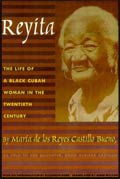
 María de los Reyes Castillo Bueno (1902-1997), a black woman known
as “Reyita,” recounts her life in Cuba over the span of ninety
years. Reyita's voice is at once dignified, warm, defiant, strong,
poetic, principled, and intelligent. Her story—as told to and
recorded by her daughter Daisy Castillo—begins in Africa with her
own grandmother's abduction by slave-traders and continues through a
century of experiences with prejudice, struggle, and change in Cuba
for Reyita and her numerous family members
María de los Reyes Castillo Bueno (1902-1997), a black woman known
as “Reyita,” recounts her life in Cuba over the span of ninety
years. Reyita's voice is at once dignified, warm, defiant, strong,
poetic, principled, and intelligent. Her story—as told to and
recorded by her daughter Daisy Castillo—begins in Africa with her
own grandmother's abduction by slave-traders and continues through a
century of experiences with prejudice, struggle, and change in Cuba
for Reyita and her numerous family members